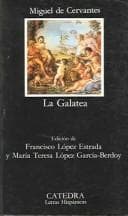
Spanish fiction -- Translations into English; Spanish poetry -- Translations into English
A somewhat similar instance is afforded by La Rochefoucauld, who asked
Madame de Sablé to review his _Pensées_ in the _Journal des Savants_.
The lady thoughtfully submitted the manuscript of her article to the
author, and the result is recorded by Hippolyte Cocheris, _Table
méthodique et analytique des articles du Journal des Savants depuis
sa réorganisation en 1816 jusqu'en 1858 inclusivement précédée d'une
notice historique sur ce journal depuis sa fondation jusqu'à nos jours_
(Paris, 1860), pp. vi.-vii. "Larochefoucauld prit au mot Mme de Sablé;
il usa très-librement de son article, il supprima les critiques,
garda les éloges, et le fit insérer dans le _Journal des Savants_
(1665, p. 116 et suiv.), ainsi amendé et pur de toute prétention à
l'impartialité."
[101] The full title of d'Urfé's book is _L'Astrée, où par plusieurs
histoires et sous personnes de bergers et d'autres sont déduits les
divers effects de l'Honneste Amitié_. The date of publication has
long been doubtful; it is now, apparently, established that the First
Part, consisting of twelve books, was originally issued in 1607. Only
one copy of this edition is known to exist. For a description of this
unique volume, discovered by M. Edwin Trossat at Augsburg in 1869, see
the _Catalogue des livres du baron James de Rothschild_ (Paris, 1887),
vol. ii. p. 197, no. 1527.
D'Urfé had been preceded by Nicolas de Montreux who, under the
anagrammatic pseudonym of Olenix du Mont-Sacré, had published the five
volumes entitled _Les Bergeries de Juliette_ at Paris between 1585
and 1598: see Heinrich Koerting, _Geschichte des französichen Romans
im XVII. Jahrhundert_ (Oppeln und Leipzig), vol. i., pp. 66-68. But,
though Jean-Louis Guez de Balzac declares (_Œuvres complètes_, Paris,
1665, vol. ii. p. 634) that _Les Bergeries de Juliette_ was long
preferred to _Astrée_ by French provincials during the seventeenth
century, Montreux found so little favour in Paris, that he abandoned
pastoralism, and took to writing a history of the Turks instead: see
Émile Roy, _La Vie et les œuvres de Charles Sorel, sieur de Souvigny,
1602-1674_ (Paris, 1891), pp. 115-116. It was d'Urfé who made the
pastoral fashionable. Part of his immediate vogue may be attributed to
the fact that his Euric, Galatée, Alcidon and Daphnide were supposed
to represent Henri IV., Marguerite de Valois, the Duc de Bellegarde,
and the Princesse de Conti. These dubious identifications, however,
would not explain the enthusiasm of readers so different in taste
and character, and so far apart in point of time, as St. François de
Sales, Madame de Sévigné, Prévost (the author of _Manon Lescaut_),
and Rousseau. There is no accounting for tastes, and perhaps Márquez
Torres's polite Frenchman sincerely admired the _Galatea_; but indeed
he had left a far better pastoral at home. _Astrée_ greatly exceeds
the _Galatea_ in achievement, importance, and significance. M. Paul
Morillot is within the mark in saying: "_L'Astrée_ de d'Urfé est
Public-domain text, read in full here on John Shaqi.
Reviews
Reviews
No reviews yet
Be the first to share your thoughts on this work.
Join the Discussion
Join the discussion
Sign in to leave a comment or review.
Sign InorCreate an account