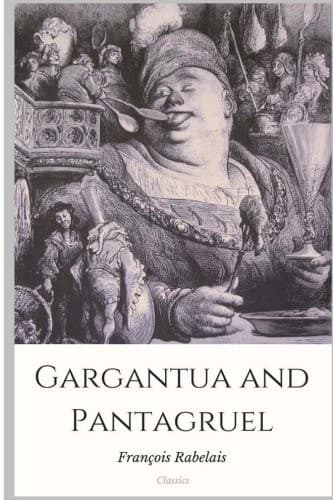
Fantasy fiction, French -- Translations into English; Gargantua (Legendary character) -- Fiction; Giants -- Fiction
And because
in all other monasteries and nunneries all is compassed, limited, and
regulated by hours, it was decreed that in this new structure there should
be neither clock nor dial, but that according to the opportunities and
incident occasions all their hours should be disposed of; for, said
Gargantua, the greatest loss of time that I know is to count the hours.
What good comes of it? Nor can there be any greater dotage in the world
than for one to guide and direct his courses by the sound of a bell, and
not by his own judgment and discretion.
Item, Because at that time they put no women into nunneries but such as
were either purblind, blinkards, lame, crooked, ill-favoured, misshapen,
fools, senseless, spoiled, or corrupt; nor encloistered any men but those
that were either sickly, subject to defluxions, ill-bred louts, simple
sots, or peevish trouble-houses. But to the purpose, said the monk. A
woman that is neither fair nor good, to what use serves she? To make a nun
of, said Gargantua. Yea, said the monk, and to make shirts and smocks.
Therefore was it ordained that into this religious order should be admitted
no women that were not fair, well-featured, and of a sweet disposition; nor
men that were not comely, personable, and well conditioned.
Item, Because in the convents of women men come not but underhand, privily,
and by stealth, it was therefore enacted that in this house there shall be
no women in case there be not men, nor men in case there be not women.
Item, Because both men and women that are received into religious orders
after the expiring of their noviciate or probation year were constrained
and forced perpetually to stay there all the days of their life, it was
therefore ordered that all whatever, men or women, admitted within this
abbey, should have full leave to depart with peace and contentment
whensoever it should seem good to them so to do.
Item, for that the religious men and women did ordinarily make three vows,
to wit, those of chastity, poverty, and obedience, it was therefore
constituted and appointed that in this convent they might be honourably
married, that they might be rich, and live at liberty. In regard of the
legitimate time of the persons to be initiated, and years under and above
which they were not capable of reception, the women were to be admitted
from ten till fifteen, and the men from twelve till eighteen.
Chapter 1.LIII.
How the abbey of the Thelemites was built and endowed.
Public-domain text, read in full here on John Shaqi.
Reviews
Reviews
No reviews yet
Be the first to share your thoughts on this work.
Elsewhere in the archive
Join the Discussion
Join the discussion
Sign in to leave a comment or review.
Sign InorCreate an account