Young ladies! the vulgar saying that a woman should never give her heart
to a man until she is asked for it, is, like many vulgar sayings, a good
one. Colonel Vaughan is the type of a class amongst which all are liable
to be thrown; and although men of his talent, knowledge of the world,
and apparent sincerity are rare, you may each of you meet with one such.
If you do, beware of falling in love with him until he plainly tells you
that he is in love with you, and asks if you are willing to marry him.
Colonel Vaughan leaves the drawing-room in search of Mr Gwynne, humming
a little Scotch air, the _refrain_ of which is 'and troth I'll wed ye
a,' a thing he has often wished he could actually do.
He finds Mr Gwynne in his library, and reminds him of the promised ride.
The horses are ordered, and they are soon trotting down the drive. As if
by mutual consent, they take the turn that leads to Pentre, Lady Mary
Nugent's place. It is about a mile from Glanyravon, and beautifully
situated on a hill that commands a fine prospect of dale, wood, and
river.
The handsome mother and daughter are at home, and hail the arrivals
with great glee. As Lady Mary is not at all certain that Colonel
Vaughan's attentions are not exclusively meant for her, she divides her
civilities with a charming tact between the two gentlemen, and looks so
captivating whilst she does so, that the colonel wishes that her
statue-like daughter had a little of her animation.
Everything that art and taste can devise is collected to adorn the
ladies and their abode, and if nature is lacking within doors, she is
profuse in her gifts without.
There is nothing worth recording in the conversation; if Colonel Vaughan
had thought it over afterwards, he would probably have laughed at the
platitudes he had uttered, and wondered why people paid morning visits.
The coming of age was a grand topic, and the colonel promised to go
again the following day, and 'help in the decorations.'
When the gentlemen took their leave, Mr Gwynne proposed a ride through
his plantations, which he was improving and enlarging. They went
accordingly. On their way they stopped at a small farm to inquire for
one of Mr Gwynne's tenants, who was dangerously ill. Mr Gwynne
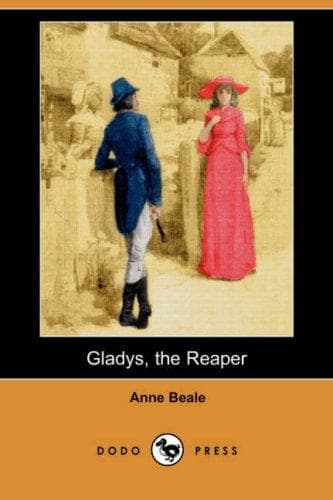
dismounted, and as he entered the house, Gladys came out; she curtseyed
as she passed Colonel Vaughan, who said,--
'How is the invalid, Gladys? I take it for granted you have been to see
him.'
'Yes, sir, Miss Gwynne sent me with some jelly. He is better, I hope?'
'And are you going home now?'
'Yes, sir.'
'Stay one moment; will you give the poor man this half-crown when you
see him again?'
Gladys approached, and took the half-crown, but with it there was
half-a-sovereign.
'The rest is for yourself, to do what you like with,' added the colonel,
in a low voice.
'Thank you, sir, but I never take money,' said Gladys, leaving the gold
in his hand, 'I do not need it.'
Public-domain text, read in full here on John Shaqi.
Reviews
Reviews
No reviews yet
Be the first to share your thoughts on this work.
Elsewhere in the archive
Join the Discussion
Join the discussion
Sign in to leave a comment or review.
Sign InorCreate an account