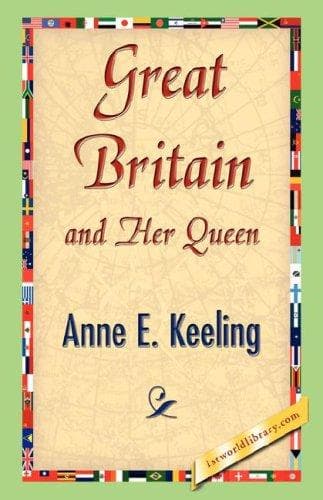
Great Britain -- History -- 19th century; Victoria, Queen of Great Britain, 1819-1901
There are not a few writers of our day whose excellent prose work has
won more of popular favour than their verse, which notwithstanding is
of high quality. Such was the "unsubduable old Roman," Walter Savage
Landor, a contemporary of Byron and Wordsworth, who long outlived
them, dying in 1864. Such--to bring two extremes together--are the
critic and poet Matthew Arnold, the poet and theologian John Henry
Newman. Intimately associated in our thought with the latter, who has
enriched our devotional poetry with one touching hymn, is Keble, the
singer _par excellence_ of the "Catholic revival," and the most
widely successful religious poet of the age, though only very few of
his hymns have reached the heart of the people like the far more
direct and fervent work of the Wesleys and their compeers. He is even
excelled in simplicity and passion, though not in grace and
tenderness, by two or three other workers in the same field, who
belong to our day, and whose verse is known more widely than their
names.
We have several women-poets who are only less beloved and less well
known than Mrs. Browning; but so far the greatest literary
distinction gained by the women of our age and country,
notwithstanding the far wider and higher educational advantages
enjoyed by them to-day, has been won, as of yore, in the field of
prose fiction. More than a hundred years ago a veteran novelist,
whose humour and observation, something redeeming his coarseness,
have ranked him among classic English authors, referred mischievously
to the engrossing of "that branch of business" by female writers,
whose "ease, and spirit, and delicacy, and knowledge of the human
heart," have not, however, availed to redeem their names from
oblivion. For some of their nineteenth-century successors at least
we may expect a more enduring memory.
Numerous as are our poets, they are far outnumbered by the novelists,
whose works are poured forth every season with bewildering profusion;
but as story-tellers have always commanded a larger audience than
grave philosophers or historians, and as our singers deal as much in
philosophy as in narrative, perhaps in seeking for the cause of this
overrunning flood of fiction we need go no further than the immensely
increased number of readers--a view in which the records of some
English public libraries will bear us out. We may therefore be
thankful that, on the whole, such literature has been of a vastly
purer and healthier character than of yore, reflecting that higher
and better tone of public feeling which we may attribute, in part at
least, to the influence of the "pure court and serene life" of the
Sovereign.
[Illustration: Charles Dickens. _From a Photograph by Elliott &
Fry_.]
[Illustration: W.M. Thackeray. _From a Drawing by Samuel Lawrence_.]
Public-domain text, read in full here on John Shaqi.
Reviews
Reviews
No reviews yet
Be the first to share your thoughts on this work.
Elsewhere in the archive
Join the Discussion
Join the discussion
Sign in to leave a comment or review.
Sign InorCreate an account