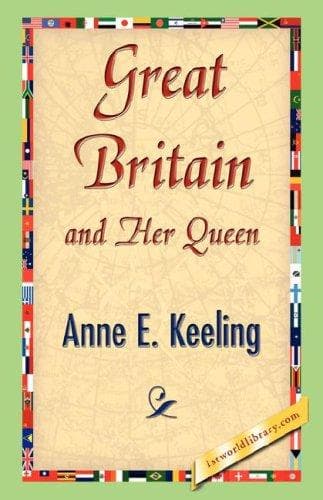
Great Britain -- History -- 19th century; Victoria, Queen of Great Britain, 1819-1901
lady in the widow's weeds was Victoria of England. These are
examples, which it would be easy to multiply, of that true oneness of
feeling between the lofty and the lowly which is the special, the
unique glory of Christ's kingdom. May our land never lack them; may
they multiply themselves to all time.
The best evidence of the truth of the Gospel is admittedly its
unequalled power of lifting up humanity to higher and yet higher
levels. In many and mighty instances of that power our age is not
barren. And in despite of the foes without and within that have
wrought her woe--of the Pharisaism that is a mask for fraud, of the
mammon-worship cloaked as respectability, of scepticism lightly
mocking, of the bolder enmity of the blasphemer--we cannot
contemplate the story of Christianity throughout our epoch, even in
these islands and this empire, without seeing that the advance of the
Faith is real and constant, the advance of the rising tide, and that
her seeming defeats are but the deceptive reflux of the ever-mounting
waves.
CHAPTER X.
PROGRESS OF THE EMPIRE FROM 1887 TO 1897.
[Illustration: Duke of Connaught.]
Resuming our pen after an interval of ten years, we have thought it
well, not only to carry on our story of the Sovereign and her realm
to the latest attainable point, but also to give some account of the
advance made and the work accomplished by the Methodist Church,
which, youngest of the greater Nonconformist denominations, has acted
more powerfully than any other among them on the religious and social
life, not only of the United Kingdom and the Empire, but of the
world. This account, very brief, but giving details little known to
outsiders, will form a valuable pendant to the sketch of the general
history of Victoria's England that we are now about to continue.
[Illustration: The Imperial Institute.]
Many thousands who rejoiced in the Queen's Jubilee of 1887 are glad
to-day that the close of the decade should find the beloved Lady of
these isles, true woman and true Queen, still living and reigning.
On September 23, 1896, Queen Victoria had reigned longer than any
other English monarch, and the desire was general for some immediate
celebration of the event; but, by the Queen's express wish, all
recognition of the fact was deferred until the sixtieth year should
be fully completed, and the nation prepared to celebrate the "Diamond
Jubilee" on June 22, 1897, with a fervour of loyalty that should far
outshine that of the Jubilee year of 1887.
Public-domain text, read in full here on John Shaqi.
Reviews
Reviews
No reviews yet
Be the first to share your thoughts on this work.
Elsewhere in the archive
Join the Discussion
Join the discussion
Sign in to leave a comment or review.
Sign InorCreate an account