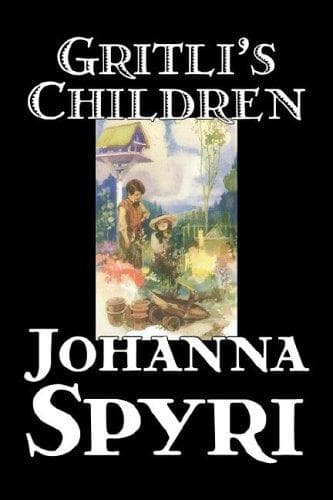
The boy became at once very confidential, and entered on the family
history. His mother was ill, and his grandfather could not go out into
the sun unless she helped him. The little girl’s name was Lenchen, and
his own was Lucas, and the other boys were Tolf and Heini, and were not
much bigger than he. As he talked, they passed the willow-bushes, and
came to the taller trees that stood near together; and quite close to
the water, wedged tightly in between two of these trees, stood a small
hut, so low and gray with moss, that it could scarcely be distinguished
from the trees.
“Here,” said the boy, and drew Elsli with him into the house. It was
pleasant and clean within, though low and small. The sun was streaming
in through the little window in the corner. Against the wall was a
bedstead, where the sick mother lay, staring with big, wide-open eyes at
the new-comer. In the sunny corner sat an old man with snow-white hair.
He looked up wonderingly at Elsli and the children. Two boys, not much
larger than Lucas, came towards them as they entered.
“We’ve been looking for you everywhere, and we couldn’t find you
anywhere!” they cried. Elsli went to the bedside and told the mother
about the children’s misfortune, and where she had found them.
The poor woman thanked her, and said it was very difficult for her to
look after the little ones, now that she was confined to her bed. The
two older boys had all they could do to keep the house in order, so she
let the younger children go out by themselves; and sometimes they got
into trouble, for they were foolish little things. As she spoke, the
mother looked with anxious eyes at Lenchen, as she stood in her
mud-stiffened clothes.
“Can I help you in any way?” asked Elsli. She spoke timidly, for the
woman’s tone and manner compelled respect.
“We have never been obliged to beg,” was the reply. “We help ourselves
as well as we can. But since I have been ill, it has been very hard.
What help could a young lady like you give us?”
“I am not a young lady. I can take off Lenchen’s frock and wash it, and
hang it out to dry,” replied Elsli, eagerly.
“Your dress shows that you are a young lady,” answered the sick woman,
evidently much surprised; and she glanced searchingly at Elsli from
head to foot.
The dress, which was one of Nora’s, was of soft woollen material,
trimmed with silk bands.
“It is not mine; it was only given me to wear,” she said.
Public-domain text, read in full here on John Shaqi.
Reviews
Reviews
No reviews yet
Be the first to share your thoughts on this work.
Elsewhere in the archive
Join the Discussion
Join the discussion
Sign in to leave a comment or review.
Sign InorCreate an account