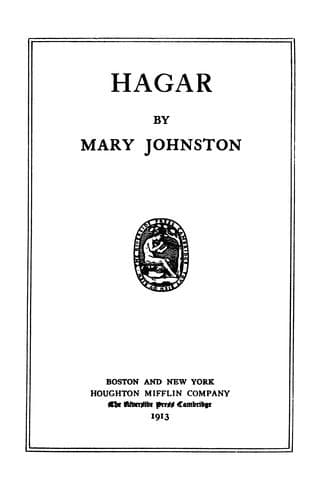
Feminist fiction; Historical fiction; Southern States -- Fiction; Women -- Southern States -- Fiction; Women authors -- Fiction
The softened, softened English sunlight bathed the broad street, the
buildings, the wheeled traffic, the people going up and down. The
two Americans, here at last at the latter end of their six months
abroad, delighted in the tender light, in the soft afternoon sky
with a few sailing clouds, in the street sights and sounds, in the
English speech. They strolled rather than walked; even at times they
dawdled rather than strolled. They developed a tendency to stand
before shop-windows. So strong and handsome a pair were they that they
attracted some attention. Thirty-five and thirty-two, both tall, both
well-made, lithe, active, both aglow with health; she a magnificent
rosy blonde, he blue-eyed, but with nut-brown hair; both dressed with
an unconventional simplicity, fitness, and comfort; both interested as
children and happy in each other's company--those who observed them did
not call them "Promise-Bearers"; and yet, in a way, that was what they
were. There were three children at home with as splendid a grandmother.
A University had sent Christopher to make an investigation, and the
children had said, "You go, too, mother! It'll be splendid. You need a
rest!" and Christopher had said, "Molly, you need another honeymoon."
The English weather was uncommonly good. As they came to Green Park
a barrel-organ was playing. Spring was full at hand; you read it
everywhere.
Two men passed, talking. "Yes, to confer at Klerksdorp, with Steyn and
Botha and De Wet. Peace presently, and none too soon!"
"I should think not. I'm done with wars."
"Little Annie Rooney," played the barrel-organ.
"There is more than one way for societies to survive," said
Christopher, "and some day men will find it out. You can survive
by being a better duellist and for a longer time than the other
fellow--and you can survive by being the better toiler, also with
persistence--or you can survive by being the better thinker, in
an endless, ascending scale. Each plane makes the lower largely
unnecessary, is, indeed, the lower moved up, become more merciful and
wiser. Survive--to live over--to outlive. The true survivor--wouldn't
you like to see him--see her--see _us_, Molly?"
"Yes," said Molly soberly. "We are a long way off."
Christopher assented. "True enough. And, thank Heaven! the true
survivor will always vanish toward the truer yet. But I don't know--it
seems to me--the twentieth century might catch a faint far glimpse of
our lineaments! I am madly, wildly, rashly optimistic for the twentieth
century--even when I remember how optimistic they were fifty years ago!
Who could help being optimistic on such an afternoon? Look at the gold
on the green!"
The barrel-organ played an old, gay dance.
Public-domain text, read in full here on John Shaqi.
Reviews
Reviews
No reviews yet
Be the first to share your thoughts on this work.
Elsewhere in the archive
Join the Discussion
Join the discussion
Sign in to leave a comment or review.
Sign InorCreate an account