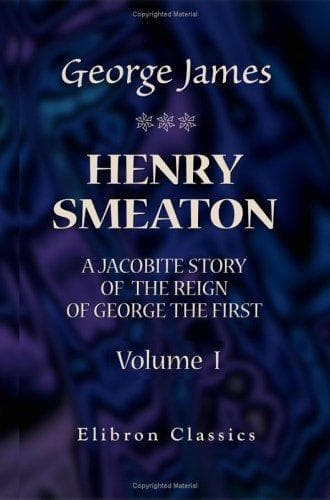
Henry Smeaton: A Jacobite Story of the Reign of George the First.James, G. P. R. (George Payne Rainsford)
General
Henry Smeaton: A Jacobite Story of the Reign of George the First.
James, G. P. R. (George Payne Rainsford)
Jacobite Rebellion, 1715 -- Fiction
Considering the period of the year, which was only the end of
September, the day was cold and wintry, when a party, consisting of
some sixteen horse, took their way through one of the remote districts
of Northumberland. The sky was covered with a film of grey cloud, and
the wind, keen and chilling, as if loaded with hail or snow, swept
over the bleak hills and moors.
Northumberland was, at that time, from many local causes, far behind
the rest of England in point of cultivation and numbers. Remote from
the capital either of England or Scotland, and holding but very scanty
communication with the rest of Europe, the power and authority of
government was less felt and acknowledged in the great northern county
than elsewhere; old thoughts and habits clung to the inhabitants with
greater tenacity; news circulated less freely, and men were more under
the influence of the great proprietors than perhaps in any other
English shire. The party of horse, therefore, which I have mentioned,
and which was headed, as the reader may suppose, by the young Earl of
Eskdale and Richard Newark, not only passed unquestioned through a
district where a great majority of the people were attached to the
Stuart cause, but were received in the small towns and villages with
much cordiality, as soon as it was perceived that they were not
soldiers of the House of Hanover. The Northumberland man has a certain
degree of northern cautiousness about him; but he is by no means
without the merry English spirit, and a good portion of wit. Few
inquiries were made of the travellers as to the end and object of
their journey; but a sly and jesting allusion was often ventured to
the cause of the exiled king, and every information was given
voluntarily regarding the insurrectionary movements in Scotland, and
the general feelings of the people of the county itself.
The report, which had reached the west, of Forster and others being in
arms in Northumberland, proved to have been greatly premature, and
Smeaton now found that nothing was certain as to the proceedings of
the malcontents and the government, except that warrants were out for
the arrest of the Earl of Derwentwater, and Forster of Ramborough,
member for the county, together with several other persons of less
note, and that the Earl and his companion, with several of their
friends, were closely concealed.
Public-domain text, read in full here on John Shaqi.
Reviews
Reviews
No reviews yet
Be the first to share your thoughts on this work.
Elsewhere in the archive
Join the Discussion
Join the discussion
Sign in to leave a comment or review.
Sign InorCreate an account