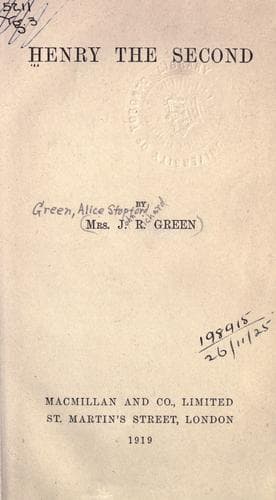
Great Britain -- History -- Henry II, 1154-1189; Henry II, King of England, 1133-1189
All hope of progress, of any wise and statesmanlike settlement of
Ireland, utterly died away when, on Easter night, 16th April 1172, Henry
sailed from Wexford. The next morning he landed near St. David's. He
entered its gates as a pilgrim, on foot and staff in hand, while the
monks came out in solemn procession to lead him to the ancient church on
the other side of the river. Suddenly a Welsh woman sprang out from
among the crowd, and striking her hands together wildly, threw
herself at his feet crying with a loud voice, "Avenge us to-day,
Lechlavar! Avenge the people of this land!" The woman's bitter cry told
the first thought of all the thronging multitudes of eager Welshmen that
day, how Merlin had prophesied that an English king, the conqueror of
Ireland, should die on Lechlavar, a great stone which formed a rude
natural bridge across the stream, and round which the pagan superstitions
of an immemorial past still clung. When the strange procession reached the
river, Henry stood for a moment looking steadily at the stone, then with a
courage which we can scarcely measure, he firmly set his foot on it and
slowly crossed over; and from the other side, in the face of all the
people he turned and flung his taunt at the prophet, "Who will ever again
believe the lies of Merlin?" As he passed through Cardiff another omen met
him; a white-robed monk stood before him as he came out of church. "God
hold thee, Cuning!" he cried in the English tongue, and broke out into
passionate warnings of evil to come unless the king would show more
reverence to the Sunday, a matter about which there was at this time a
great stirring of religious feeling. "Ask this rustic," said Henry in
French to a knight who held his rein, "whether he has dreamed this." The
monk turned from the interpreter to the king and spoke again: "Whether I
have dreamed this or no, mark this day, for unless thou amendest thy life,
before this year has passed thou shalt hear such news of those thou lovest
best, and shalt win such sorrow from them, that it shall not fail thee
till thy dying day!"
Public-domain text, read in full here on John Shaqi.
Reviews
Reviews
No reviews yet
Be the first to share your thoughts on this work.
Elsewhere in the archive
Join the Discussion
Join the discussion
Sign in to leave a comment or review.
Sign InorCreate an account