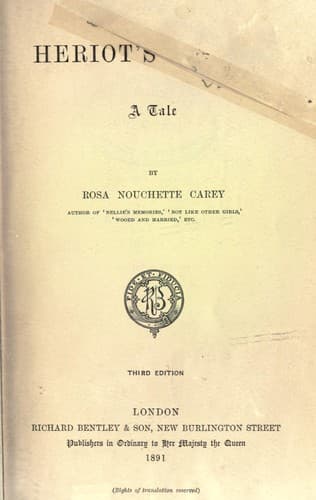
England -- Social life and customs -- 19th century -- Fiction; Families -- Fiction
Such thoughts as these came tranquilly to Mildred as she sat alone one
July day in the same room where, three years before, the Angels of Life
and Death had wrestled over one frail girl, in the room where she had so
patiently and tenderly nursed Olive's sick body and mind back to health.
For once in her life busy Mildred was idle, the work lay unfolded beside
her, while her eyes wandered dreamily over the fair expanse of sunny
green dotted with browsing sheep and tuneful with the plaintive bleating
of lambs; there was a crisp crunching of cattle hoofs on the beck gravel
below, a light wind touched the elms and thorns and woke a soft
soughing, the tall poplar swayed drowsily with a flicker of shaking
leaves; beyond the sunshine lay the blue dusk of the circling hills,
prospect fit to inspire a daydream, even in a nature more prosaic than
Mildred Lambert's.
It was Mildred's birthday; she was thirty to-day, and she was smiling to
herself at the thoughts that she felt younger and brighter and happier
than she had three years before.
They had been such peaceful years, full of congenial work and blessed
with sympathetic fellowship; she had sown so poorly, she thought, and
had reaped such rich harvests of requited love; she had come amongst
them a stranger three years ago, and now she could number friends by the
score; even her poorer neighbours loved and trusted her, their northern
reserve quite broken down by her tender womanly graces.
'There are two people in Kirkby Stephen that would be sorely missed,' a
respectable tradesman once said to Miss Trelawny, 'and they are Miss
Lambert and Dr. Heriot, and I don't know which is the greater favourite.
I should have lost my wife last year but for her; she sat up with her
three nights running when that fever got hold of her.'
And an old woman in the workhouse said once to Dr. Heriot when he wished
her to see the vicar:
'Nae thanks to ye, doctor; ye needn't bother yersel' about minister,
Miss Lambert has sense enough. I wudn't git mair gude words nir she
gi'es; she's terrible gude, bless her;' and many would have echoed old
Sally Bates's opinion.
Mildred's downright simplicity and unselfishness were winning all
hearts.
'Aunt Milly has such a trustworthy face, people are obliged to tell
their troubles when they look at her,' Polly said once, and perhaps the
girl held the right clue to the secret of Mildred Lambert's influence.
Real sympathy, that spontaneity of vigorous warm feeling emanating from
the sight of others' pain, is rarer than we imagine. Without exactly
giving expression to conventional forms of condolence, Mildred conveyed
the most delicate sympathy in every look and word; by a rapid transit of
emotion, she seemed to place herself in the position of the bereaved; to
feel as they felt--the sacred silence of sorrow; her few words never
grazed the outer edge of that bitter irritability that trenches on great
pain, and so her mere presence seemed to soothe them.
Public-domain text, read in full here on John Shaqi.
Reviews
Reviews
No reviews yet
Be the first to share your thoughts on this work.
Elsewhere in the archive
Join the Discussion
Join the discussion
Sign in to leave a comment or review.
Sign InorCreate an account