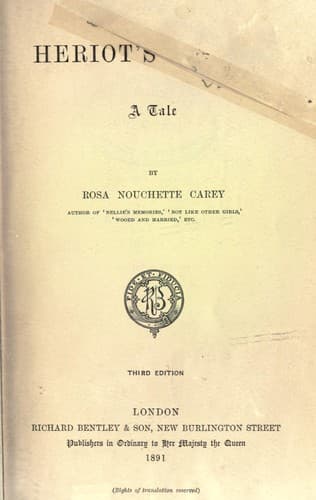
England -- Social life and customs -- 19th century -- Fiction; Families -- Fiction
Yes, good and womanly as he thought her, Dr. Heriot was ignorant of the
real Mildred. Aunt Milly alone with her boys, blushing and dimpling
under their saucy praise, would have shattered all his ideas of
primness; just as those fits of wise eloquence, while Olive and Polly
lingered near her in the dark, the sweet impulse of words that stirred
them to their hearts' core, would have roused his latent enthusiasm to
the utmost.
Dr. Heriot's true ideal of womanly beauty and goodness passed his door
daily, disguised in Quaker grays and the large shady black hat that was
for use and not for ornament, but he did not know it; when he looked out
it was to note how fresh and piquant Polly looked in her white dress and
blue ribbons as she tripped beside Mildred, or how the Spanish hat with
its long black feather suited Olive's sombre complexion.
Olive had greatly improved since her illness; she was still irredeemably
plain in her own eyes, but few were ready to endorse this opinion; her
figure had rounded and filled out into almost majestic proportions, her
shoulders had lost their ungainly stoop, and her slow movements were not
without grace.
Her complexion would always be sallow, but the dark abundant hair was
now arranged to some advantage, and the large earnest eyes were her
redeeming features, while a settled but soft seriousness had replaced
the old absorbing melancholy.
Olive would never look on the brighter side of life as a happier and
more sanguine temperament would; she still took life seriously, almost
solemnly, though she had ceased to repine that length of days had been
given her; with her, conscientiousness was still a fault, and she would
ever be given to weigh herself carefully and be found wanting; but there
were times when even Olive owned herself happy, when the grave face
would relax into smiles and the dark eyes grow bright and soft.
And there were reasons for this; Olive no longer suffered the pangs of
passionate and unrequited love, and her heart was at rest concerning
Richard.
For two years the sad groping after truth, the mute search for vocation,
the conflict between duty and inclination, had continued, and still the
grave, stern face, kindly but impressive, has given no clue to his
future plans. 'I will tell you when I know myself, father,' was his
parting speech more than once. 'I trust you, Cardie, and I am content to
wait,' was ever his father's answer.
But deliverance came at last, when the fetters fell off the noble young
soul, when every word in the letter that reached Mr. Lambert spoke of
the new-born gladness that filled his son's heart; there was no
reticence.
'You trusted me and you were content to wait then; how often I have
repeated these words to myself, dear father; you have waited, and now
your patience shall be rewarded.
Public-domain text, read in full here on John Shaqi.
Reviews
Reviews
No reviews yet
Be the first to share your thoughts on this work.
Elsewhere in the archive
Join the Discussion
Join the discussion
Sign in to leave a comment or review.
Sign InorCreate an account