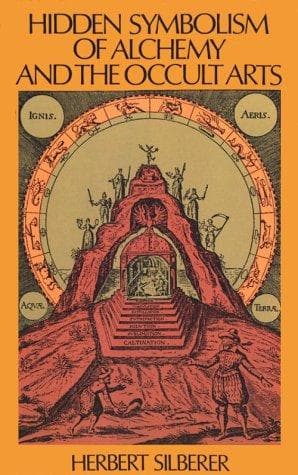
Hidden Symbolism of Alchemy and the Occult ArtsSilberer, Herbert
Religion
Hidden Symbolism of Alchemy and the Occult Arts
Silberer, Herbert
Alchemy; Society of Rosicrucians; Symbolism (Psychology)
Note B (128). That the ideas of gold and offal lie very near each other is
shown in numerous forms and variations in myth, fairy tale and popular
superstition. I mention above all the figure of the ducat or gold-dropper
which has probably been attenuated from a superstition to a joke, and
around it are gathered such expressions as “he has gold like muck,” “he
must have a gold dropper at his house”; then the description of bloody
hemorrhoids as golden veins; the fabulous animals that produce as
excrement gold and precious things. Here belong also the golden ass [K. H.
M., No. 36], which at the word “Bricklebrit” begins “to spew gold from
before and behind,” or [Pentam., No. 1], at the command, “arre cacaure,”
gives forth gold, pearls and diamonds as a priceless diarrhea. [Arre is a
word of encouragement like our get-up; cacuare is derived naturally from
cacare, kacken = to cack, perhaps with an echo of aurum, oro, gold.] It
occurs frequently in sagas that animal dung, e.g., horse manure, is
changed into gold as, inversely, gold sent by evil spirits is easily
turned [again] into dung. Gold is, in the ancient Babylonian way of
thinking, which passes over into many myths, muck of hell or the under
world. If a man buried a treasure so that no one should find it, he does
well to plant a cactus on the covered [treasure] as a guardian of the
gold, according to an old magical custom. An attenuation of the comparison
dung = gold seems to be coal = gold. In Stucken we find the comparison
excrement = Rheingold = sperm [S. A. M., p. 262] and connected with it
[pp. 266 ff.] a mass of material mythologically connected with it. I
mention the similar parallels derived from dream analysis (Stekel, Spr. d.
Tr., passim), further in particular the psychologically interesting
contributions of Freud on “Anal character” (Kl. Schr., pp. 132 ff.) like
Rank’s contribution. (Jb. ps. F., IV, pp. 55 ff.)
Public-domain text, read in full here on John Shaqi.
Reviews
Reviews
No reviews yet
Be the first to share your thoughts on this work.
Elsewhere in the archive
Join the Discussion
Join the discussion
Sign in to leave a comment or review.
Sign InorCreate an account