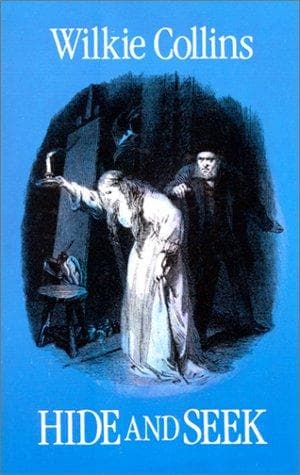
Deaf women -- Fiction; Father figures -- Fiction; Painters -- Fiction; Psychological fiction; Young men -- Fiction
Time had lavishly added to Mrs. Peckover’s size, but had generously
taken little or nothing from her in exchange. Her hair had certainly
turned grey since the period when Valentine first met her at the circus;
but the good-humored face beneath was just as hearty to look at now, as
ever it had been in former days. Her cheeks had ruddily expanded;
her chin had passed from the double to the triple stage of jovial
development--any faint traces of a waist which she might formerly have
possessed were utterly obliterated--but it was pleasantly evident, to
judge only from the manner of her bustling entry into Mrs. Blyth’s room,
that her active disposition had lost nothing of its early energy, and
could still gaily defy all corporeal obstructions to the very last.
Nodding and smiling at Mr. and Mrs. Blyth, and Zack, till her vast
country bonnet trembled aguishly on her head, the good woman advanced,
shaking every moveable object in the room, straight to the tea-table,
and enfolded Madonna in her capacious arms. The girl’s light figure
seemed to disappear in a smothering circumambient mass of bonnet ribbons
and unintelligible drapery, as Mrs. Peckover saluted her with a rattling
fire of kisses, the report of which was audible above the voluble
talking of Mr. Blyth and the boisterous laughter of Zack.
“I’ll tell you all about how I came here directly, sir; only I couldn’t
help saying how-d’ye-do in the old way to little Mary to begin with,”
said Mrs. Peckover apologetically. It had been found impossible to
prevail on her to change the familiar name of “little Mary,” which she
had pronounced so often and so fondly in past years, for the name which
had superseded it in Valentine’s house. The truth was, that this worthy
creature knew nothing whatever about Raphael; and, considering “Madonna”
to be an outlandish foreign word intimately connected with Guy Fawkes
and the Gunpowder Plot, firmly believed that no respectable Englishwoman
ought to compromise her character by attempting to pronounce it.
“I’ll tell you, sir--I’ll tell you directly why I’ve come to London,”
repeated Mrs. Peckover, backing majestically from the tea-table, and
rolling round easily on her own axis in the direction of the couch, to
ask for the fullest particulars of the state of Mrs. Blyth’s health.
“Much better, my good friend--much better,” was the cheerful answer;
“but do tell us (we are so glad to see you!) how you came to surprise us
all in this way?”
Public-domain text, read in full here on John Shaqi.
Reviews
Reviews
No reviews yet
Be the first to share your thoughts on this work.
Elsewhere in the archive
Join the Discussion
Join the discussion
Sign in to leave a comment or review.
Sign InorCreate an account