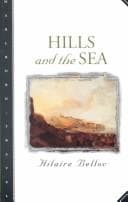
England -- Description and travel; Europe -- Description and travel
You may sometimes see in modern picture galleries an attempt to combine
the story from which proceeds the nourishing flame of Christianity with
the crudities and the shameful ugliness of our decline. Thus, with
others, a picture of our Lord and Mary Magdalen; all the figures except
that of our Lord were dressed in the modern way. I remember another of
our Lord and the little children, where the scene is put into a village
school. Now, if you can imagine (which it is not easy to do) such an
attempt to be successful, untouched by the love of display and
eccentricity, and informing--as it commonly pretends to inform--our time
with an idea, then you will understand what the traveller saw that
morning in Notre Dame. The church seemed the vastest cavern that had
ever been built for worship. Coming in from the high morning, the
half-light alone, with which we always connect a certain majesty and
presence, seemed to have taken on amplitude as well. The incense veiled
what appeared to be an infinite lift of roof, and the third great
measurement--the length of nave that leads like a forest ride to the
lights of the choir--were drawn out into an immeasurable perspective by
reason of a countless crowd of men and women divided by the narrow path
of the procession. So full was this great place that a man moved slowly
and with difficulty, edging through such a mass of folk as you may find
at holiday time in a railway station, or outside a theatre--never surely
before was a church like this, unless, indeed, some very rich or very
famous man happened to be gracing it. But here to-day, for nothing but
the function proper to the feast, the cathedral was paved and floored
with human beings. In the galilee there was a kind of movement so that a
man could get up further, and at last the traveller found a place to
stand in just on the edge of the open gangway, at the very end of the
nave. He peered up this, and saw from the further end, near the altar,
the head of the procession approaching, which was (in his fancy of that
morning) like the line of the Faith, still living and returning in a
perpetual circle to revivify the world. Moreover, there was in the
advent of the procession a kind of climax. As it came nearer, the great
crowd moved more quickly towards it; children were lifted up, and by one
of Sully's wide pillars a group of three young soldiers climbed on a
rail to see the great sight better. The Cardinal-Archbishop, very old
and supported by his priests, half walked and half tottered down the
length of the people; his head, grown weary with age, barely supported
the mitre, from which great jewels, false or true, were flashing. In his
hand he had a crozier that was studded in the same way with gems, and
that seemed to be made of gold; the same hands had twisted the metal of
it as had hammered the hinges of the cathedral doors. Certainly there
here appeared one of the resurrections of Europe. The matter of life
Public-domain text, read in full here on John Shaqi.
Reviews
Reviews
No reviews yet
Be the first to share your thoughts on this work.
Elsewhere in the archive
Join the Discussion
Join the discussion
Sign in to leave a comment or review.
Sign InorCreate an account