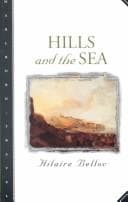
England -- Description and travel; Europe -- Description and travel
When we had formed park in the grey market-square, ridden our horses off
to water at the river and to their quarters, cleaned kit and harness,
and at last were free--that is, when it was already evening--Matthieu, a
friend of mine who had come by another road with his battery, met me
strolling on the bridge. Matthieu was of my kind, he had such a lineage
as I had and such an education. We were glad to meet. He told me of his
last halting-place--Pagny--hidden on the upper river. It is the place
where the houses of Luxembourg were buried, and some also of the great
men who fell when Henry V of England was fighting in the North, and when
on this flank the Eastern dukes were waging the Burgundian wars. It was
not the first time that the tumult of men in arms had made echoes along
the valley. Matthieu and I went off together to dine. He lent me a pin
of his, a pin with a worked head, to pin my tunic with where it was
torn, and he begged me to give it back to him. But I have it still, for
I have never seen him since; nor shall I see him, nor he me, till the
Great Day.
THE LOOE STREAM
Of the complexity of the sea, and of how it is manifold, and of how it
mixes up with a man, and may broaden or perfect him, it would be very
tempting to write; but if one once began on this, one would be immeshed
and drowned in the metaphysic, which never yet did good to man nor
beast. For no one can eat or drink the metaphysic, or take any
sustenance out of it, and it has no movement or colour, and it does not
give one joy or sorrow; one cannot paint it or hear it, and it is too
thin to swim about in. Leaving, then, all these general things, though
they haunt me and tempt me, at least I can deal little by little and
picture by picture with that sea which is perpetually in my mind, and
let those who will draw what philosophies they choose. And the first
thing I would like to describe is that of a place called the Looe
Stream, through which in a boat only the other day I sailed for the
first time, noticing many things. When St. Wilfrid went through those
bare heaths and coppices, which were called the forest of Anderida, and
which lay all along under the Surrey Downs, and through which there was
a long, deserted Roman road, and on this road a number of little brutish
farms and settlements (for this was twelve hundred years ago), he came
out into the open under the South Downs, and crossed my hills and came
to the sea plain, and there he found a kind of Englishman more savage
than the rest, though Heaven knows there were none of them particularly
refined or gay. From these Englishmen the noble people of Sussex are
descended.
Public-domain text, read in full here on John Shaqi.
Reviews
Reviews
No reviews yet
Be the first to share your thoughts on this work.
Elsewhere in the archive
Join the Discussion
Join the discussion
Sign in to leave a comment or review.
Sign InorCreate an account