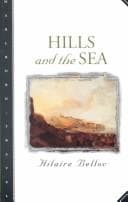
England -- Description and travel; Europe -- Description and travel
If you did not know what was underneath you, you could not understand
why this river should run separate from the sea all round, but when you
have noticed the depths on the chart, you see a kind of picture in your
mind: the wall of that old mass of land standing feet above the floor of
the Channel, and the top of what was once its fields and its villas, and
its great church almost awash at low tides, and through it a cleft,
which was, I say, a dell in the old park, but is now that Looe Stream
buoyed up on either side, and making a river by itself running in the
sea.
Sailing over it, and remembering all these things at evening, I got out
of the boil and tumble into deep water. It got darker, and the light on
the _Nab_ ship showed clearly a long way off, and purple against the
west stood the solemn height of the island. I set a course for this
light, being alone at the tiller, while my two companions slept down
below. When the night was full the little variable air freshened into a
breeze from the south-east; it grew stronger and stronger, and lifted
little hearty following seas, and blowing on my quarter drove me
quickly to the west, whither I was bound. The night was very warm and
very silent, although little patches of foam murmured perpetually, and
though the wind could be heard lightly in the weather shrouds.
The star Jupiter shone brightly just above my wake, and over Selsey
Bill, through a flat band of mist, the red moon rose slowly, enormous.
RONCESVALLES
Sitting one day in Pampeluna, which occupies the plain just below the
southern and Spanish escarpment of the Pyrenees, I and another
remembered with an equal desire that we had all our lives desired to see
Roncesvalles and the place where Roland died. This town (we said) was
that which Charlemagne destroyed upon his march to the Pass, and I, for
my part, desired here, as in every other part of Europe where I had been
able to find his footsteps, to follow them, and so to re-create his
time.
The road leads slantwise through the upper valleys of Navarre, crossing
by passes the various spurs of the mountains, but each pass higher than
the last and less frequented, for each is nearer the main range. As you
leave Pampeluna the road grows more and more deserted, and the country
through which it cuts more wild. The advantages of wealth which are
conferred by the neighbourhood of the capital of Navarre are rapidly
lost as one proceeds; the houses grow rarer, the shrines more ruinous
and more aged, until one comes at last upon the bleak valley which
introduces the final approach to Roncesvalles.
Public-domain text, read in full here on John Shaqi.
Reviews
Reviews
No reviews yet
Be the first to share your thoughts on this work.
Elsewhere in the archive
Join the Discussion
Join the discussion
Sign in to leave a comment or review.
Sign InorCreate an account