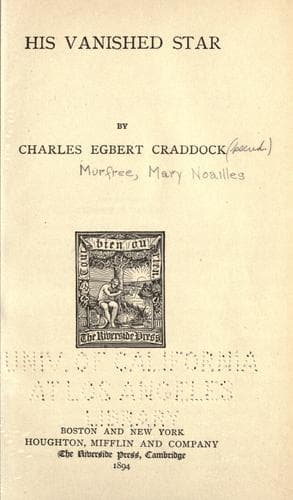
Alcohol trafficking -- Fiction; Mountain life -- Tennessee -- Fiction
Lorenzo Taft's arrival at his home, that afternoon, might have seemed
to the casual observer an event of the simplest significance. It is
true, a country trader, on his return from a bout of barter at that
emporium the cross-roads store, seldom casts about him so vigilant
an eye, or sustains so controlled and weighty a manner, or wears a
countenance of such discernment, its alert sagacity hardly at variance
with certain predatory suggestions,--on the contrary, finding in them
its complement of expression. But these points might only have argued
ill for the profits of the bargainer with whom he had dealt. As the
great lumbering canvas-hooded wagon came to a halt in the space beneath
the loft of the log barn, under partial shelter, at least, and he
began to unharness and turn out the two mules, the anxious glances
he cast toward the house might have betokened impatient expectation
of assistance in unloading the ponderous vehicle, and carrying into
the store the cumbrous additions to its stock represented in saddles,
cutlery, sugar, bolts of calico, stacks of hats,--the integrity of
all more or less endangered by the weather. But no one emerged from
the house, and after feeding the mules he turned hastily, took his
way in great strides through the rain across the yard, which was half
submerged in puddles and running water, and unlocked the door. As he
entered, big, burly, and dripping with rain, prophetically at odds
with the falling out of the yet unknown events, he gazed about the dim
interior with a dissatisfied, questioning eye. All was much as usual,
save dimmer and drearier for the storm without. Here the unseen rain
asserted its presence by the fusillade on the roof and the plashing
from the eaves. The wind rushed furiously in recurrent blasts against
the windowless walls. Since the denizens within could not mark how it
bent the greatest tree, they might thus judge of its force, and quake
beneath its tempestuous buffets. Now and again the writhen boughs of
the elm just outside beat as in frantic appeal on the clapboards of
the roof. The chimney piped a tuneless, fifelike note, and occasional
drops fell a-sputteriug into the dull blaze of the fire. Cornelia Taft
herself was dull and spiritless of mien, as she sat on a low stool
on the hearth knitting a blue yarn stocking. The room, lurking in a
state of semi-obscurity, seemed the dreariest possible expression of
a dwelling; only as the fitful blaze flared and fell were distortions
of its simple furniture distinguishable,--the table with its blue
ware, the bed and its gaudy quilt, the spinning-wheel, and the old
warping-bars, where now merely skeins of cobwebs were wont to hang from
peg to peg, since Cornelia Taft's precocity did not extend to weaving.
A black cat sat blinking her yellow eyes before the fire. She had so
conversational an aspect that it might seem that Taft had interrupted
some conference,--of a dismal nature, doubtless, for there were traces
Public-domain text, read in full here on John Shaqi.
Reviews
Reviews
No reviews yet
Be the first to share your thoughts on this work.
Elsewhere in the archive
Join the Discussion
Join the discussion
Sign in to leave a comment or review.
Sign InorCreate an account