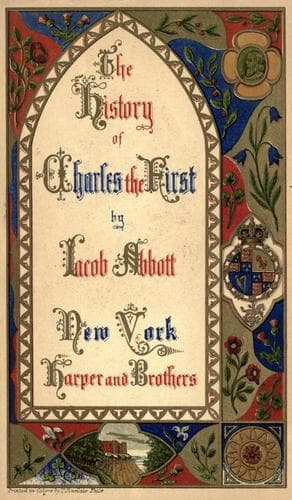
History of King Charles the First of EnglandAbbott, Jacob
History
History of King Charles the First of England
Abbott, Jacob
Charles I, King of England, 1600-1649; Great Britain -- History -- Charles I, 1625-1649; Great Britain -- Kings and rulers -- Biography
The Commons returned to their place of deliberation, but they were not
satisfied. They wanted something besides promises. Some were in favor
of granting supplies "in gratitude to his majesty for his gracious
answer." Others thought differently. They did not see the necessity
for raising money for this foreign war. They had greater enemies at
home (meaning Buckingham and popery) than they had abroad. Besides,
if the king would stop his waste and extravagance in bestowing honors
and rewards, there would be money enough for all necessary uses. In a
word, there was much debate, but nothing done. The king, after a short
time, sent a message to them urging them to come to decision. They sent
him back a declaration which showed that they did not intend to yield.
Their language, however, was of the most humble character. They called
him "their dread sovereign," and themselves "his poor commons." The
king was displeased with them, and dissolved the Parliament. They, of
course, immediately became private citizens, and dispersed to their
homes.
[Sidenote: 1628.]
[Sidenote: New one called.]
[Sidenote: Subterfuges of the king.]
[Sidenote: Parliament again dissolved.]
After trying some ineffectual attempts to raise money by his own royal
prerogatives and powers, the king called a new Parliament, taking
some curious precautions to keep out of it such persons as he thought
would oppose his plans. The Earl of Bristol, whom Buckingham had
been so jealous of, considering him as his rival, was an influential
member of the House of Peers. Charles and Buckingham agreed to omit
him in sending out the royal writs to summon the peers. He petitioned
Parliament, claiming a right to his seat. Charles then sent him his
writ, but gave him a command, as his sovereign, not to attend the
session. He also selected four of the prominent men in the House of
Commons, men whom he considered most influential in opposition to him
and to Buckingham, and appointed them to offices which would call them
away from London; and as it was the understanding in those days that
the sovereign had a right to command the services of his subjects,
they were obliged to go. The king hoped, by these and similar means,
to diminish the influence against him in Parliament, and to get a
majority in his favor. But his plans did not succeed. Such measures
only irritated the House and the country. After another struggle, this
Parliament was dissolved too.
[Sidenote: The breach between the king and the Parliament widens.]
Public-domain text, read in full here on John Shaqi.
Reviews
Reviews
No reviews yet
Be the first to share your thoughts on this work.
Join the Discussion
Join the discussion
Sign in to leave a comment or review.
Sign InorCreate an account