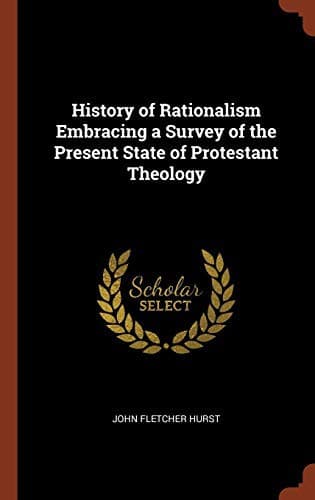
History of Rationalism Embracing a Survey of the Present State of Protestant TheologyHurst, J. F. (John Fletcher)
History
History of Rationalism Embracing a Survey of the Present State of Protestant Theology
Hurst, J. F. (John Fletcher)
Protestantism; Rationalism -- History
Both the great branches of the Protestant church had always highly
prized their rich hymns, of which there were eighty thousand in
existence. Some of the finest lyrics of any tongue were among the
number. The sacred songs now used in our American churches are not
solely of English origin, or of our own production; but many of the
sweetest of them are free versions from the German hymnists. The
Rationalists, not being content with their present laurels, began in
great earnestness to despoil the hymn-books of the Protestant church of
everything savoring of inspiration or of any of the vital doctrines
already rejected. They looked upon those songs of devotion as composed
during the iron age of truth, and therefore unfit to be sung by the
congregations whose lot had been cast in the golden period. Should these
verses continue to be sung by the church, they would remain a strong tie
holding the masses to the pitiable days of effete orthodoxy. The
Rationalists reasoned correctly, for, in Germany, music is a power which
has at times defied the authority of popes and kings. It was, therefore,
with a sort of savage satisfaction that these destroyers of truth began
the work of denuding those earnest and evangelical hymns of all their
vigor and nationality for the purpose of placing in their stead cold and
heartless moral verses.
Klopstock commenced the work of alteration, though with a good
intention, by remodeling twenty-nine old church hymns. Cramer and
Schlegel followed in his steps. Soon the devout and animating songs of
Gellert, Bach, and their brother minstrels were despoiled of the spirit
that had ever made them dear to the popular heart and familiar to the
common ear. By and by, everybody who could make a tolerable rhyme seized
some of the master-pieces of hymnology, and set them up on stiff
philosophical stilts. New hymn books were introduced into many of the
churches, and the people sang Rationalism. General superintendents,
consistorial counselors, and court preachers, rivaled each other in
preparing a new volume of religious songs for the territory under their
charge. Individual towns and churches had their own selections. Some
portions of Germany, especially Wuertemberg, refused awhile to give up
the old hymns, and certain writers of the sterling character of the poet
Schubert, raised a loud and indignant voice against the wretched
vandalism. But they could accomplish nothing, and the old hymns suffered
that fearful mortality which the Rationalists had by this time become
so able to inflict on almost everything of value. It is a lamentable
scene to see those reckless doubters sit down with scalpel in hand to
dissect as pure and inspiring hymns as are to be found in the devotional
literature of any nation. For a good sacred song is only complete just
as its author finishes it. If an authorized hymn committee attempt to
alter it, they fill it at once with icicles. They can no more improve it
Public-domain text, read in full here on John Shaqi.
Reviews
Reviews
No reviews yet
Be the first to share your thoughts on this work.
Elsewhere in the archive
Join the Discussion
Join the discussion
Sign in to leave a comment or review.
Sign InorCreate an account