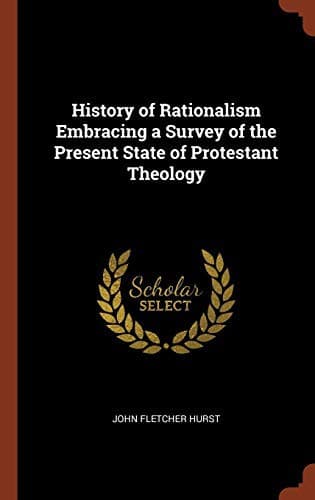
History of Rationalism Embracing a Survey of the Present State of Protestant TheologyHurst, J. F. (John Fletcher)
History
History of Rationalism Embracing a Survey of the Present State of Protestant Theology
Hurst, J. F. (John Fletcher)
Protestantism; Rationalism -- History
evil, and hence he inherits sin with all its dire results. Since then,
sin has become a bias and righteousness requires an effort for its
performance. But man is accessible to divine legislation by being the
subject of fear, shame, and punishment. The church is an abiding
testimony and a continued means for the redemptive ministry of Christ.
It is the congregation of the sanctified.[74]
From these two useful professors in Berlin we pass southward to
Heidelberg, and delay a moment with the celebrated Rothe. In his work on
the _Primitive Church_ he endeavors to explain the philosophy of the
whole ecclesiastical system. He views the elements of the church in
solution, and thence tries to deduce general principles. He advances the
view, with Coleridge and Arnold, that the church will not be complete
until absorbed in the state. Its present separate condition is
provisional, and can only last during the time that Christianity is
being developed. This period may be of long duration, but the
development of our race is ever progressing. The church must exist on
its own basis during the interval. Human deeds of righteousness tend
toward the perfection of the church. Then will religion permeate the
world. Yet it will not exist as something separate, but all-penetrative.
It will not be absolutely divine, but superlatively human. Thus will the
dualism of the human and divine, the religious and the moral, be
destroyed. When the day of ecclesiastical perfection--which is really
civil perfection--arrives, the state will perform the functions of the
church. It will exercise church discipline for the purpose of religious
and moral training. The divergence between religious and worldly science
will be abrogated, and there will be no longer any conflict between the
worship of God and nature. It is plain that these views are based upon
those of Hegel, who said of the state, that "it is the totality of moral
purposes."[75]
Public-domain text, read in full here on John Shaqi.
Reviews
Reviews
No reviews yet
Be the first to share your thoughts on this work.
Elsewhere in the archive
Join the Discussion
Join the discussion
Sign in to leave a comment or review.
Sign InorCreate an account