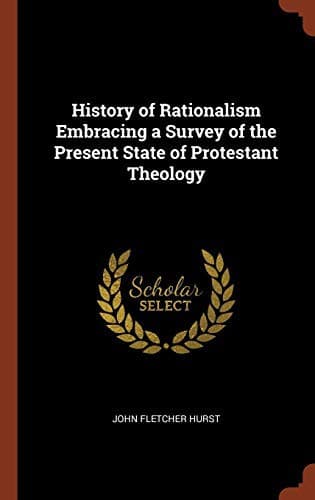
History of Rationalism Embracing a Survey of the Present State of Protestant TheologyHurst, J. F. (John Fletcher)
History
History of Rationalism Embracing a Survey of the Present State of Protestant Theology
Hurst, J. F. (John Fletcher)
Protestantism; Rationalism -- History
Without, the heavens were dark with the portents of impending social
convulsions. The signs were unmistakable. The masses were intoxicated
with a wild frenzy seldom, if ever, surpassed. They were intent upon the
destruction of all constitutional authority. Freedom from the restraints
of law and religion, the ruling thought of the Continent during 1848,
was their sole object. It was clear that if the populace could overthrow
the governments they would not be long in putting an end to all the
outward and traditional observances of religion. For the middle and
lower classes had not as yet become permeated by the healthful leaven
which had been introduced into the theological circles by the apologetic
antagonists of Strauss and his compeers. The wisest statesman could not
foresee one day's deeds of that skeptical, revolutionary rabble, which
had already lost its self-control. Blood had actually been shed.
Barricades had been reared in the streets of the larger cities. The
universities were pouring forth their hundreds of students and
professors, to take part in the conflict. The revolutionary crowds were
choosing their leaders; the royalist forces were everywhere fortifying;
princes were concealing their plate and strengthening their
hiding-places. This was the social and political scene while the five
hundred were praying, singing, counseling, and comforting each other
over the sleeping dust of Luther and Melanchthon.
In the days of the imprisoned Peter, fetters were strong, prison doors
well-barred, and the four quaternions of soldier guards faithful; but
all these safeguards could not resist the force which lay in the
unceasing prayers of the church. So with the revolutionary movements of
the people in 1848, as opposed to the Christian faith of the members of
the Church Diet. That assembly contributed more than all other human
agencies to save the German states from utter political and social ruin,
and the German church from a longer night and a fiercer storm than any
through which it had passed.
The practical result of the session was an invitation to all the
Protestant churches of Germany to observe the fifth of the coming
November, the Sunday following the anniversary of the Reformation, as a
day of humiliation for past unfaithfulness and prayer for the revival
of true religion throughout the land. It was resolved to form a
confederation of all the German churches adhering to the confessions of
the Reformation, in order to promote denominational unity, be a mutual
defense against Rationalism and indifference, advance social reforms,
protect the rights of the church against the encroachments of civil
authority, and secure a more intimate fellowship with evangelical bodies
outside of Germany.
Public-domain text, read in full here on John Shaqi.
Reviews
Reviews
No reviews yet
Be the first to share your thoughts on this work.
Elsewhere in the archive
Join the Discussion
Join the discussion
Sign in to leave a comment or review.
Sign InorCreate an account