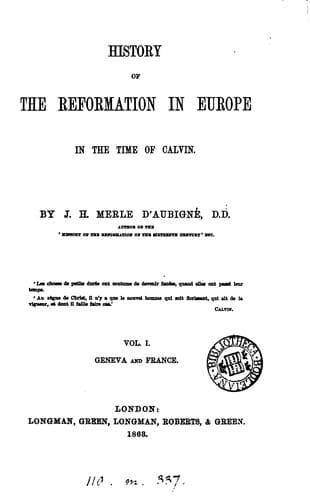
History of the Reformation in Europe in the Time of Calvin, Vol. 6 (of 8)Merle d'Aubigné, J. H. (Jean Henri)
History
History of the Reformation in Europe in the Time of Calvin, Vol. 6 (of 8)
Merle d'Aubigné, J. H. (Jean Henri)
Reformation
blood, and to promote the prosperity of their kingdoms.[244] These
articles raised Henry to the summit of his wishes, and he took measures
immediately for imparting to this interview extraordinary solemnity
and brilliancy. This conference of the two kings made a great noise in
Scotland, and preparations were also made there. Henry VIII. set out
and went to York full of hope. Uncle and nephew were at last to see
each other, and to talk together, and every one saw that this meeting
would have weighty consequences. Never was Scotland nearer having a
reform after the fashion of Henry VIII.
[Sidenote: PROJECTED INTERVIEW AT YORK.]
No one understood this better than Beatoun. What he feared more than
all besides was that the power of the Romish hierarchy would be
abolished, and the Gospel be put in its place. The cardinal, for the
first time in his life, had been anticipated, surpassed in cleverness
and in influence. He did not however lose courage, but with all the
adherents of his party applied himself to the task with all his soul.
They sowed hatred between the king and the nobles. They employed all
imaginable means to dissuade the king from the fatal meeting. At first
they sought to alarm him. ‘By going to York,’ said the cardinal to him,
‘you will expose yourself to the suspicions of the emperor, you will
make an enemy of your old ally the King of France, and you will bring
down on yourself the disgrace of the pope. In short’ (and it was this
which most terrified James), ‘you will expose yourself to the greatest
dangers. This treacherous king will keep you prisoner in England as
James I. was kept in former days.’ James replied that he had given
his word, and that the king was awaiting him, that to absent himself
from the _rendezvous_ would lead to war with England, and that he
had not the means of carrying it on. The cardinal was amazed at this
independence of the king, for he was not accustomed to it. Discerning
more and more clearly the greatness of the peril, his bishops and he
agreed that there was but one means available for inducing James to
renounce his purpose. As this prince was always in want of money, they
sought to gain him by gifts of large sums.[245] This argument did not
miss the mark. They then appealed to him anew and said--‘Sire, there is
a good deal of money in Scotland, and it is easy to get possession of
it. If war should break out, the clergy will give you thirty thousand
crowns per annum, and you will be able to get a hundred thousand more
by confiscating the property of heretics, if you will only authorize
proceedings against them by a judge whom we will name to you and who
is well qualified for the purpose. Will you spare this wicked people?
Do they not read the Old and New Testaments? Are they not in rebellion
against the authority of the pope and against the king’s majesty?
Have they not, by new and detestable errors, troubled the churches,
destroyed piety, and overthrown institutions established for many
Public-domain text, read in full here on John Shaqi.
Reviews
Reviews
No reviews yet
Be the first to share your thoughts on this work.
Elsewhere in the archive
Join the Discussion
Join the discussion
Sign in to leave a comment or review.
Sign InorCreate an account