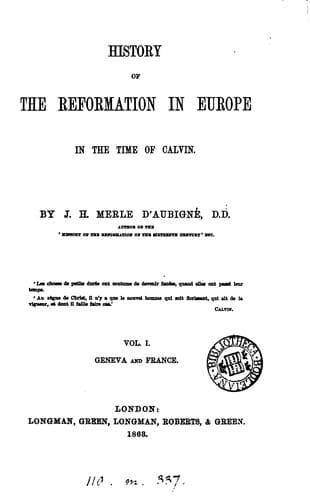
History of the Reformation in Europe in the Time of Calvin, Vol. 6 (of 8)Merle d'Aubigné, J. H. (Jean Henri)
History
History of the Reformation in Europe in the Time of Calvin, Vol. 6 (of 8)
Merle d'Aubigné, J. H. (Jean Henri)
Reformation
The news of the imprisonment of Courault rapidly spread through Geneva,
and deeply affected the friends of the Reformation. A pastor in prison!
Yes, and justly, if he were guilty of any common offence. But he had
done what he believed to be his duty. From the Christian pulpit he
had rebuked scandalous excesses, and on that account he was committed
to prison, while those who were really guilty of them were let alone
and went unpunished.[606] It appears from the protocol of the 19th,
that two men, forming part of the band which had gone about singing by
night and had made disturbances at Rive, had been themselves placed
in confinement. But the place and the date of that affair prove that
it was on a quite different charge. The incarceration of Courault
filled Calvin and Farel with sorrow, for they esteemed their old and
venerable colleague, and they knew how much he had already suffered
for the truth’s sake. Some of the councillors and citizens friendly
to the Reformation resolved to protest against the imprisonment of
their pastor. Claude Savoye, Michel Sept, Lambert, Chautemps, Domaine
d’Arlod, Claude and Louis Bernard, Deserts, Claude Pertemps, and many
others joined Calvin and Farel, and they all went together in a long
procession to the Hôtel de Ville. They entered the hall of the council,
and found there two out of the four syndics, and these the men who were
most against them, Richardet and de Chapeaurouge.
Farel spoke first. He complained that they had acted ‘ill, wickedly,
and unjustly in putting Courault in prison,’ and demanded that the
Council of the Two Hundred should be assembled. The laymen thought
it strange that their adversaries should not be satisfied with
announcing, like Richardet, that they would not go to the preaching,
but should seem to intend also to deprive their fellow-citizens of
it by committing the preachers to prison. The notion that a syndic
should presume to hinder him from hearing the Word of God especially
irritated Michel Sept. ‘They shall preach!’ he said, vehemently.
Farel, remembering all that he had done and borne through long years
for this city of Geneva, to the emancipation of which he had probably
contributed more than any other man by his teaching, his courage, his
prayers, and his deeds, said to the magistrates, ‘Without me you would
not be what you are.’
Public-domain text, read in full here on John Shaqi.
Reviews
Reviews
No reviews yet
Be the first to share your thoughts on this work.
Elsewhere in the archive
Join the Discussion
Join the discussion
Sign in to leave a comment or review.
Sign InorCreate an account