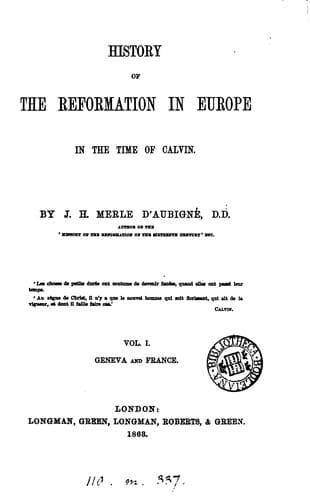
History of the Reformation in Europe in the Time of Calvin, Vol. 6 (of 8)Merle d'Aubigné, J. H. (Jean Henri)
History
History of the Reformation in Europe in the Time of Calvin, Vol. 6 (of 8)
Merle d'Aubigné, J. H. (Jean Henri)
Reformation
An improvement, however, had just been made in the government. On
February 9, 1539, the general assembly of the people having to elect
the syndics of the year, not one of the citizens who had played a
part in the expulsion of Calvin and his friends was chosen. The new
magistrates were taken from the moderate party, and one of them,
Antoine Chiccand, was attached to the reformer. The less respectable
class of the people did not seem to be aware of the change, and they
celebrated the accession of the new magistrates after a strange
fashion. It was the time of Carnival, Easter falling that year on April
6; and although Geneva had no longer any wish for the religion of the
papacy, this class of the inhabitants still kept up its festivals and
its amusements. Their pastimes were numerous, burlesque, and even
indecent. ‘There were mummeries, lewdness, indecent songs, dances, and
blasphemies. Some went naked about the town with timbrels and pipes,’
says a contemporary.[772] Did these disorderly doings form part of
the Roman Catholic reaction that was then attracting attention? We do
not assert this. However it might be, the pastors complained to the
council, and the latter ordered an inquiry, especially against those
who went about the streets at night without their clothes. It appeared
from the inquiry that ‘those who had done so were all young, and had
intended nothing more than a freak of youthful folly.’ The council
‘remonstrated’ with the delinquents; and some women who had ‘danced to
the songs’ were put in prison for a day, and afterwards were severely
censured by the syndic. Three days later the council issued a decree
which enjoined the people ‘devoutly to listen to the Word of God on
Sundays, and to govern themselves according to it; not to swear nor
blaspheme, nor play for gold or silver;’ and forbade them ‘to go about
the town after nine o’clock without candles, to dance at any dances
except at weddings, to sing any indecent songs, to disguise themselves,
or to indulge in masks or mummeries.’
Public-domain text, read in full here on John Shaqi.
Reviews
Reviews
No reviews yet
Be the first to share your thoughts on this work.
Elsewhere in the archive
Join the Discussion
Join the discussion
Sign in to leave a comment or review.
Sign InorCreate an account