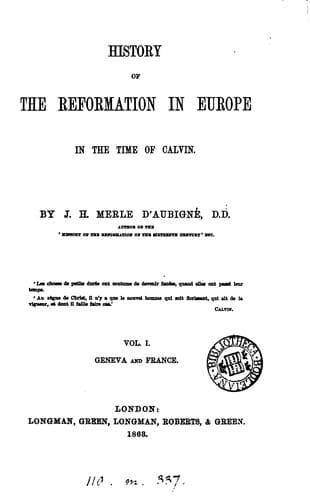
History of the Reformation in Europe in the Time of Calvin, Vol. 8 (of 8)Merle d'Aubigné, J. H. (Jean Henri)
History
History of the Reformation in Europe in the Time of Calvin, Vol. 8 (of 8)
Merle d'Aubigné, J. H. (Jean Henri)
Reformation
The heads of the clerical party, impatient to be rid of an enemy
whom they hated, hurried on the fatal decree. The Parliament met
on Thursday, June 17, seven days after Cromwell's imprisonment;
and Cranmer, who had attended the sittings of the House of Lords on
the previous days, was not present on this occasion. The earl of
Southampton, who had become lord keeper of the privy seal in Cromwell's
place, entered and presented the bill of attainder against his
predecessor. It was read a first time. The second and third readings
followed on Saturday the 19th. Cranmer, whose absence had probably
been noticed, was present; and, according to his lamentable system,
adapted to the despotism of his master, after having complied with the
dictate of his conscience by calling to mind the merits of Cromwell,
he complied with the will of the king, and by his silence acquiesced
in the proceedings of the House. The bill was sent to the lower House.
It appears that the commons raised some scruples or objections, for
the bill remained under consideration for ten days. It was not until
June 29 that the commons sent the bill back to the peers, with some
amendments; and the peers, ever in haste, ordered that the three
readings should take place at the same sitting. They then sent it to
the king, who gave his assent to it. The man who was prosecuted had
been so powerful that it was feared lest he should regain his strength
and begin to advance with fresh energy.
The king, meanwhile, seems to have hesitated. He was less decided than
those who at this time enjoyed his favor.
Although the lord chancellor, the duke of Norfolk, and Lord Russell had
come to announce to Cromwell that the bill of attainder had passed,
he remained still a whole month in the Tower. The royal commissioners
interrogated him at intervals on various subjects. It seems even that
the king sent him relief, probably to mitigate the severities of his
imprisonment. Cromwell habitually received the king's commissioners
with dignity, and answered them with discretion. Whether the questions
touched on temporal or ecclesiastical affairs, he ever showed himself
better informed than his questioners.[344]
[Sidenote: HIS LETTER TO THE KING.]
Public-domain text, read in full here on John Shaqi.
Reviews
Reviews
No reviews yet
Be the first to share your thoughts on this work.
Elsewhere in the archive
Join the Discussion
Join the discussion
Sign in to leave a comment or review.
Sign InorCreate an account