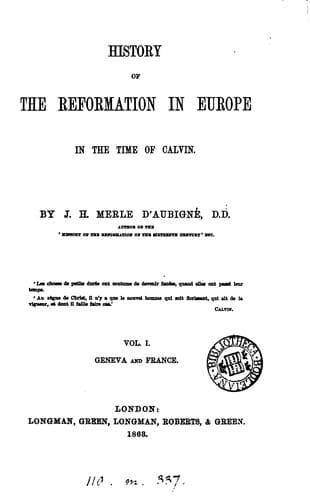
History of the Reformation in Europe in the Time of Calvin, Vol. 8 (of 8)Merle d'Aubigné, J. H. (Jean Henri)
History
History of the Reformation in Europe in the Time of Calvin, Vol. 8 (of 8)
Merle d'Aubigné, J. H. (Jean Henri)
Reformation
cabinets and her coffers, but they found nothing tending to compromise
her. They found no jewels, for she had parted with her own to pay her
debts. Next, they visited Elizabeth Holland's room, where they found
much gold, many pearls, rings and precious stones; and of these they
sent a list to the king. They laid aside the books and manuscripts of
the duke; and the next day by their direction the duchess of Richmond
and Mistress Holland set out for London, where they were to be examined.
[Sidenote: DIVISIONS OF THE HOWARDS.]
Mistress Holland was examined first. She deposed that the duke had said
to her 'that the king was sickly, and could not long endure; and the
realm like to be in an ill case through diversity of opinions.' The
duchess of Richmond deposed 'that the duke her father would have had
her marry Sir Thomas Seymour, brother to the earl of Hertford, which
her brother also desired, wishing her withal to endear herself so into
the king's favor, as she might the better rule here as others had done;
and that she refused.'[470] This deposition appears to corroborate one
of the charges brought against Norfolk by the chancellor. Nevertheless,
the supposition that a father, from ambitious motives, could urge his
daughter to consent to incestuous intercourse is so revolting, that one
can hardly help asking whether there really was any thing more in the
case than an exercise of the natural influence of a daughter-in-law
over her father-in-law. The duchess corroborated the accusation
touching the royal arms borne by Surrey, his hatred of the Seymours,
and the ill which he meditated doing them after the king's death; and
she added that he had urged her not to carry too far the reading of the
Holy Scriptures.
Various other depositions having been taken, the duke and his son were
declared guilty of high treason (January 7). On the 13th, Surrey was
tried before a jury at Guildhall. He defended himself with much spirit;
but he was condemned to death; and this young nobleman, only thirty
years of age, the idol of his countrymen, was executed on Tower Hill,
January 21.[471] Public feeling was shocked by this act of cruelty,
and every one extolled the high qualities of the earl. His sister, the
duchess of Richmond, took charge of his five children, and admirably
fulfilled her duty as their aunt.[472]
[Sidenote: NORFOLK'S APPEAL TO THE KING.]
Public-domain text, read in full here on John Shaqi.
Reviews
Reviews
No reviews yet
Be the first to share your thoughts on this work.
Elsewhere in the archive
Join the Discussion
Join the discussion
Sign in to leave a comment or review.
Sign InorCreate an account