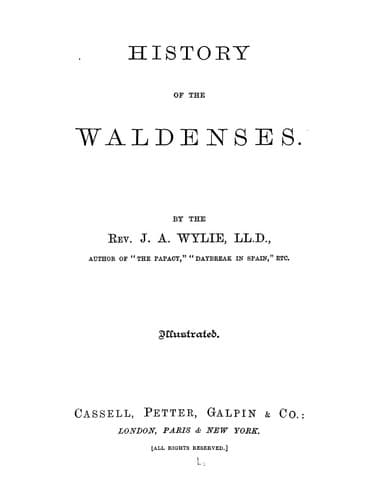
History of the WaldensesWylie, J. A. (James Aitken)
History
History of the Waldenses
Wylie, J. A. (James Aitken)
Church history -- Middle Ages, 600-1500; Waldenses
All through the winter of 1689-90, the Vaudois remained in their
mountain fortress, resting after the marches, battles, and sieges of
the previous months, and preparing for the promised return of the
French. Where Henri Arnaud had pitched his camp, there had he also
raised his altar, and if from that mountain-top was pealed forth the
shout of battle, from it ascended also, morning and night, the prayer
and the psalm. Besides daily devotions, Henri Arnaud preached two
sermons weekly, one on Sunday and another on Thursday. At stated times
he administered the Lord’s Supper. Nor was the commissariat overlooked.
Foraging parties brought in wine, chestnuts, apples, and other fruits,
which the autumn, now far advanced, had fully ripened. A strong
detachment made an incursion into the French valleys of Pragelas and
Queyras, and returned with salt, butter, some hundred head of sheep,
and a few oxen. The enemy, before departing, had destroyed their stock
of grain, and as the fields were long since reaped, they despaired of
being able to repair their loss. And yet bread to last them all the
winter through had been provided, in a way so marvellous as to convince
them that He who feeds the fowls of the air was caring for them. Ample
magazines of grain lay all around their encampment, although unknown as
yet to them. The snow that year began to fall earlier than usual, and
it covered up the ripened corn, which the Popish inhabitants had not
time to cut when the approach of the Vaudois compelled them to flee.
From this unexpected store-house the garrison drew as they had need.
Little did the Popish peasantry, when they sowed the seed in spring,
dream that Vaudois hands would reap the harvest.
Corn had been provided for them, and, to Vaudois eyes, provided almost
as miraculously as was the manna for the Israelites, but where were
they to find the means of grinding it into meal? At almost the foot of
the Balsiglia, on the stream of the Germagnasca, is a little mill.
The owner, M. Tron-Poulat, three years before, when going forth into
exile with his brethren, threw the mill-stone into the river; “for,”
said he, “it may yet be needed.” It was needed now, and search being
made for it, it was discovered, drawn out of the stream, and the mill
set a-working. There was another and more distant mill at the entrance
of the valley, to which the garrison had recourse when the immediate
precincts of the Balsiglia were occupied by the enemy and the nearer
mill was not available. Both mills exist to this day; their roofs
of brown slate may be seen by the visitor, peering up through the
luxuriant foliage of the valley, the wheel motionless, it may be, and
the torrent which turned it shooting idly past in a volley of spray.
Public-domain text, read in full here on John Shaqi.
Reviews
Reviews
No reviews yet
Be the first to share your thoughts on this work.
Elsewhere in the archive
Join the Discussion
Join the discussion
Sign in to leave a comment or review.
Sign InorCreate an account