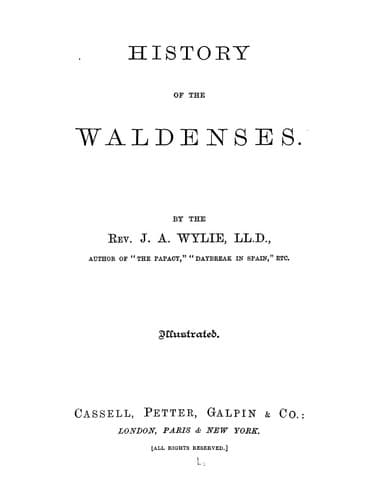
History of the WaldensesWylie, J. A. (James Aitken)
History
History of the Waldenses
Wylie, J. A. (James Aitken)
Church history -- Middle Ages, 600-1500; Waldenses
The physical grandeurs of the spot were in meet accordance with the
moral sublimity of the transaction. Immediately beneath was spread
out the green bosom of the valley, with here and there the silver of
the Pelice gleaming out amid vineyards and acacia-groves. Filling
the horizon on all sides save one stood up an array of magnificent
mountains, white with the snows of winter. Conspicuous among them were
the grand peaks of the Col de Malure and the Col de la Croix. They
looked the silent and majestic witnesses of the oath in which a heroic
people bound themselves to die rather than permit the defilement of
their hearths, and the profanation of their altars, by the hordes of
an idolatrous tyranny. It was in this grand fashion that the Waldenses
opened one of the most brilliant campaigns ever waged by their arms.
The next morning, according to the duke’s order, they must choose
between the mass and the penalty annexed to refusal. A neighbouring
church--one of those which had been taken from them--stood ready, with
altar decked and tapers lighted, for the Vaudois to hear their first
mass. Hardly had the day dawned when the expected penitents were at
the church door. They would show the duke in what fashion they meant
to read their recantation. They entered the building. A moment they
stood surveying the strange transformation their church had undergone,
and then they set to work. To extinguish the tapers, pull down the
images, and sweep into the street rosary, and crucifix, and all the
other paraphernalia of the Popish worship, was but the work of a few
minutes. The minister, Humbert Artus, then ascended the pulpit, and
reading out as his text Isaiah xlv. 20--“Assemble yourselves and come;
draw near together, ye that are escaped of the nations: they have no
knowledge that set up the wood of their graven image, and pray unto a
God that cannot save”--preached a sermon which struck the key-note of
the campaign then opening.
The inhabitants of the hamlets and châlets in the mountains rushed
down, like their own winter torrents, into Lucerna, and the army of
the Vaudois reinforced, set out to purge the temple at Villaro. On
their way they encountered the Piedmontese garrison. They attacked and
drove them back; the monks, seigneurs, and magistrates, who had come
to receive the abjuration of the heretics, accompanying the troops
in their ignominious flight. The whole band of fugitives--soldiers,
priests, and judges--shut themselves up in the town of Villaro, which
was now besieged by the Vaudois. Thrice did the garrison from La Torre
attempt to raise the siege, and thrice were they repulsed. At last, on
the tenth day, the garrison surrendered, and had their lives spared,
two Waldensian pastors accompanying them to La Torre, the soldiers
expressing greater confidence in them than in any other escort.
Public-domain text, read in full here on John Shaqi.
Reviews
Reviews
No reviews yet
Be the first to share your thoughts on this work.
Elsewhere in the archive
Join the Discussion
Join the discussion
Sign in to leave a comment or review.
Sign InorCreate an account