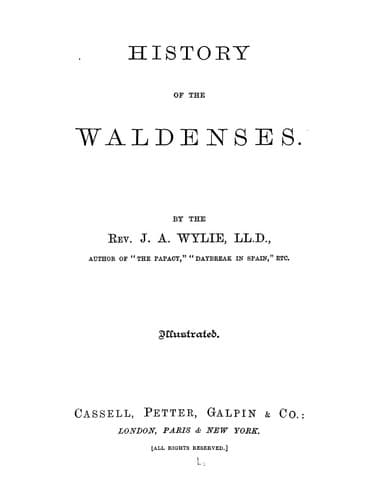
History of the WaldensesWylie, J. A. (James Aitken)
History
History of the Waldenses
Wylie, J. A. (James Aitken)
Church history -- Middle Ages, 600-1500; Waldenses
Negotiations were again resumed, not this time through the Count La
Trinita, but through Philip of Savoy, Count of Raconis, and were
speedily brought to a satisfactory issue. The Duke of Savoy had but
small merit in making peace with the men whom he found he could not
conquer. The capitulation was signed on the 5th of June, 1561, and
its first clause granted an indemnity for all offences. It is open
to remark that this indemnity was given to those who had suffered,
not to those who had committed the offences it condoned. The articles
that followed permitted the Vaudois to erect churches in their
Valleys, with the exception of two or three of their towns, and to
hold public worship--in short, to celebrate all the offices of their
religion. All the “ancient franchises, immunities, and privileges,
whether conceded by his Highness, or by his Highness’s predecessors,”
were renewed, provided they were vouched by public documents.[76]
Such was the arrangement that closed this war of fifteen months. The
Vaudois ascribed it in great part to the influence of the good Duchess
Margaret. The Pope designated it a “pernicious example,” which he
feared would not want imitators in those times when the love of many
to the Roman See was waxing cold. It stank in the nostrils of the
prelates and monks of Piedmont, to whom the heretics had been a free
booty. Nevertheless, Duke Emanuel Philibert faithfully maintained its
stipulations, the duchess being by his side to counteract any pressure
in the contrary direction. This peace, together with the summer that
was now opening, began to slowly efface the deep scars persecution had
left on the Valleys; and what further helped to console and reanimate
this brave but afflicted people, were the sympathy and aid universally
tendered them by Protestants abroad, in particular by Calvin and the
Elector Palatine, the latter addressing a spirited letter to the duke
on behalf of his persecuted subjects.[77]
Public-domain text, read in full here on John Shaqi.
Reviews
Reviews
No reviews yet
Be the first to share your thoughts on this work.
Elsewhere in the archive
Join the Discussion
Join the discussion
Sign in to leave a comment or review.
Sign InorCreate an account