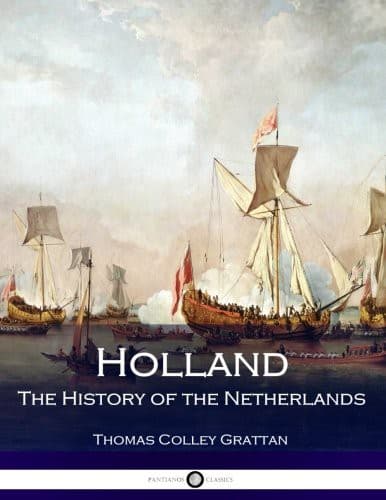
Holland: The History of the NetherlandsGrattan, Thomas Colley
History
Holland: The History of the Netherlands
Grattan, Thomas Colley
Netherlands -- History
Ferdinand Alvarez de Toledo, duke of Alva, was of a distinguished
family in Spain, and even boasted of his descent from one of the
Moorish monarchs who had reigned in the insignificant kingdom of
Toledo. When he assumed the chief command in the Netherlands, he
was sixty years of age; having grown old and obdurate in pride,
ferocity, and avarice. His deeds must stand instead of a more
detailed portrait, which, to be thoroughly striking, should be
traced with a pen dipped in blood. He was a fierce and clever
soldier, brought up in the school of Charles V., and trained
to his profession in the wars of that monarch in Germany, and
subsequently in that of Philip II. against France. In addition
to the horrors acted by the Council of Blood, Alva committed many
deeds of collateral but minor tyranny; among others, he issued
a decree forbidding, under severe penalties, any inhabitant of
the country to marry without his express permission. His furious
edicts against emigration were attempted to be enforced in vain.
Elizabeth of England opened all the ports of her kingdom to the
Flemish refugees, who carried with them those abundant stores of
manufacturing knowledge which she wisely knew to be the elements
of national wealth.
Alva soon summoned the Prince of Orange, his brothers, and all
the confederate lords, to appear before the council and answer
to the charge of high treason. The prince gave a prompt and
contemptuous answer, denying the authority of Alva and his council,
and acknowledging for his judges only the emperor, whose vassal
he was, or the king of Spain in person, as president of the order
of the Golden Fleece. The other lords made replies nearly similar.
The trials of each were, therefore, proceeded on, by contumacy;
confiscation of property being an object almost as dear to the
tyrant viceroy as the death of his victims. Judgments were promptly
pronounced against those present or absent, alive or dead. Witness
the case of the unfortunate marquess of Bergues, who had previously
expired at Madrid, as was universally believed, by poison; and his
equally ill-fated colleague in the embassy, the Baron Montigny,
was for a while imprisoned at Segovia, where he was soon after
secretly beheaded, on the base pretext of former disaffection.
Public-domain text, read in full here on John Shaqi.
Reviews
Reviews
No reviews yet
Be the first to share your thoughts on this work.
Elsewhere in the archive
Join the Discussion
Join the discussion
Sign in to leave a comment or review.
Sign InorCreate an account