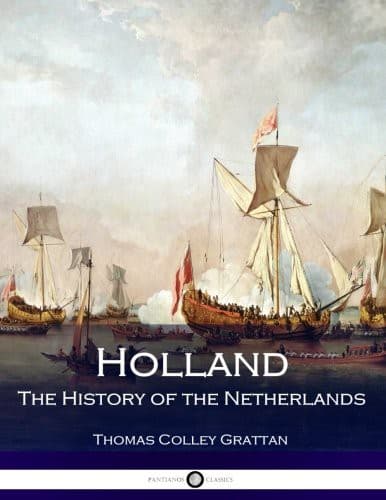
Holland: The History of the NetherlandsGrattan, Thomas Colley
History
Holland: The History of the Netherlands
Grattan, Thomas Colley
Netherlands -- History
Philip knew well that force alone was insufficient to reduce
such a people to slavery. He succeeded in persuading the states
to grant him considerable subsidies, some of which were to be paid
by instalments during a period of nine years. That was gaining
a great step toward his designs, as it superseded the necessity
of a yearly application to the three orders, the guardians of
the public liberty. At the same time he sent secret agents to
Rome, to obtain the approbation of the pope to his insidious
but most effective plan for placing the whole of the clergy in
dependence upon the crown. He also kept up the army of Spaniards
and Germans which his father had formed on the frontiers of France;
and although he did not remove from their employments the
functionaries already in place, he took care to make no new
appointments to office among the natives of the Netherlands.
In the midst of these cunning preparations for tyranny, Philip
was suddenly attacked in two quarters at once; by Henry II. of
France, and by Pope Paul IV. A prince less obstinate than Philip
would in such circumstances have renounced, or at least postponed,
his designs against the liberties of so important a part of his
dominions, as those to which he was obliged to have recourse
for aid in support of this double war. But he seemed to make
every foreign consideration subservient to the object of domestic
aggression which he had so much at heart.
He, however, promptly met the threatened dangers from abroad. He
turned his first attention toward his contest with the pope; and
he extricated himself from it with an adroitness that proved the
whole force and cunning of his character. Having first publicly
obtained the opinion of several doctors of theology, that he
was justified in taking arms against the pontiff (a point on
which there was really no doubt), he prosecuted the war with
the utmost vigor, by the means of the afterward notorious duke
of Alva, at that time viceroy of his Italian dominions. Paul soon
yielded to superior skill and force, and demanded terms of peace,
which were granted with a readiness and seeming liberality that
astonished no one more than the defeated pontiff. But Philip's
moderation to his enemy was far outdone by his perfidy to his
allies. He confirmed Alva's consent to the confiscation of the
domains of the noble Romans who had espoused his cause; and thus
gained a stanch and powerful supporter to all his future projects
in the religious authority of the successor of St. Peter.
Public-domain text, read in full here on John Shaqi.
Reviews
Reviews
No reviews yet
Be the first to share your thoughts on this work.
Elsewhere in the archive
Join the Discussion
Join the discussion
Sign in to leave a comment or review.
Sign InorCreate an account