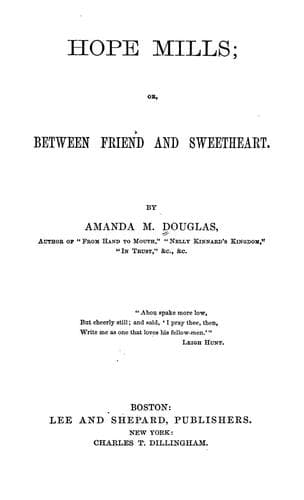
Hope Mills; Or, Between Friend and SweetheartDouglas, Amanda M.
Philosophy
Hope Mills; Or, Between Friend and Sweetheart
Douglas, Amanda M.
Fiction
Events pointed the lesson pretty forcibly. By the middle of October
there was a sudden rush of orders. Prices rallied a little. There were
some tremendous bankruptcies, but it seemed more in speculation than
legitimate industry. The new men brought a fresh infusion of spirit and
energy. One of them, a small, middle-aged man, Gilman by name, who had
once been manager and had a share in a mill that came to grief through a
defaulting cashier who had successfully forged the name of the firm, was
especially enthusiastic about the system. Jack admitted that the
culmination of the discontent was the very best thing that had happened
for the mill.
Davy went almost wild over his mistake, cursed his brother-in-law
roundly, and forbade his wife to visit her brother's household. Nothing
to do, not even three-quarter wages to live upon, with cheap coal and
cheap flour. He even waylaid Darcy, and begged to be taken back without
any share.
"I'm sorry, Davy, but it cannot be done. We resolved, whatever happened,
we would not go back on our word. You had time enough to think it over."
"Just you wait," said Price, when he heard this. "They've three years
more to wade through, and they'll never hold together all that time. It
has a very queer look, too, that, just as soon as they shoved us out,
they began to make money again. Bob Winston's the sort of fellow to look
out for himself, and he had this thing all cut and dried."
"Look here," remarked a listener, "you signed your own selves out.
Nobody made you. I haven't any faith in the scheme, but I like truth for
all that."
The men worked with a will. The monthly club meetings took on a new
interest; and they decided, if the prosperity continued, to open a
co-operative store another year. They were growing more thoughtful and
intelligent, and Gilman's influence upon them was excellent, while his
experiences widened their views. A little fresh blood certainly worked
no harm.
Jack was very cheery again. It seemed to him they had pulled through the
worst. The larger outlook was better: goods were going abroad, and money
or bonds were coming back. Here and there some new enterprise started,
but still there were hundreds of men out of employment. Yerbury showed
various signs of a new thriftiness. The farms about were better managed.
Some idle men had ventured to hire a little ground the past summer, and
raise sufficient to have something over for their trouble. The Webbers
succeeded beautifully. Of course there were slurs about a Dutchman
living on a cabbage a week, but every one knew the Webbers were not that
kind. What Germans were able to do nicely and wisely, Americans might
copy to their profit. When some of the natives were out of work, they
patched up their fences, painted a bit, laid a bad place in the
sidewalk, instead of hanging round a saloon.
Public-domain text, read in full here on John Shaqi.
Reviews
Reviews
No reviews yet
Be the first to share your thoughts on this work.
Elsewhere in the archive
Join the Discussion
Join the discussion
Sign in to leave a comment or review.
Sign InorCreate an account