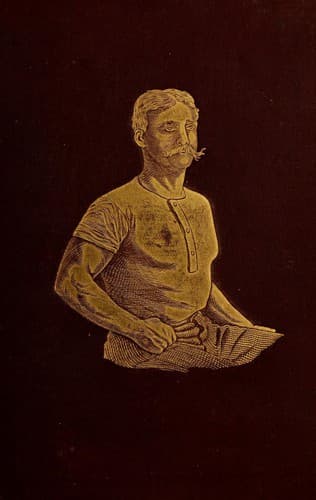
How to Get Strong and How to Stay SoBlaikie, William
Science
How to Get Strong and How to Stay So
Blaikie, William
Physical education and training
Good, stiff long-distance walking is excellent for the front thigh; but
running is better, especially when done as it ought to be, namely, not
flat-footed, but with the heel never touching the ground. Any sort of
running or walking, at any pace protracted enough to bring moderately
tired muscles, will tell, especially on these in question; while severe
work over a long distance will give them a great task, and the
consequent ability and size. Many a man may do a little desultory
running daily, perhaps for a week or two together once a year, and not
find his thighs enlarge or toughen materially. But let him put in a few
minutes each day, for several months together, at steady smart running,
as far as he can, and go comfortably, and now, besides the work becoming
easy, comes the desired size and strength as well. The hopping, which
was so good for the calves, is hardly less so for these muscles, and is
one of the best possible movements to develop them in the shortest time.
Dancing, long continued, also tells here, as an acquaintance of ours
found, who used to lead the German frequently at Newport; for, though
far from being an athlete, he said that he daily ran a mile during
the season, just to keep his legs in good order for the duties
his position demanded.
A more moderate exercise than the running, though not always so
available, is walking uphill. This, besides, as already mentioned, doing
so much for the calves, tells directly and markedly on the thighs as
well. Skating makes a pleasant substitute for walking during a part of
the colder months, and, when much distance is covered daily, brings
strong and shapely thighs.
The farmer and the laboring man, in all their heavier work done stooping
over their tasks--such as lifting, shovelling, picking, and mowing--use
the thighs much, but keep them so long fixed in one position, with
little or no varying exercise to supple and limber them and the joints,
that both gradually stiffen, and their instep soon begins to lack
elasticity, which tendency is too often increased by heavy, stiff,
and unwieldy boots.
Swinging forward when rowing, either in a boat or at the toe-straps,
after first swinging far back, takes these upper muscles in a way quite
the reverse of their ordinary use, they now aiding to pull the whole
trunk forward, and so acting like two long hooks.
All lifting of heavy objects from the ground, standing in almost any
position, tells heavily on these muscles, being about the severest
momentary test they can have, greater even than in jumping. But
occasional heavy lifting tends rather to harden the muscle than to
rapidly increase its size, protracted effort at lighter but good-sized
weights doing the latter to better advantage.
Public-domain text, read in full here on John Shaqi.
Reviews
Reviews
No reviews yet
Be the first to share your thoughts on this work.
Elsewhere in the archive
Join the Discussion
Join the discussion
Sign in to leave a comment or review.
Sign InorCreate an account