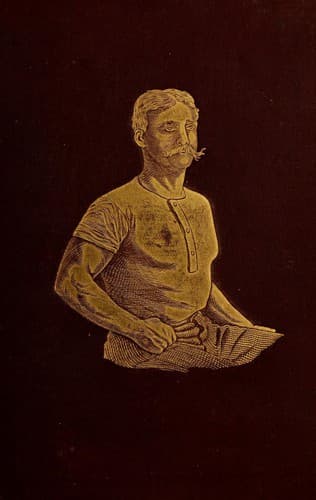
How to Get Strong and How to Stay SoBlaikie, William
Science
How to Get Strong and How to Stay So
Blaikie, William
Physical education and training
But here, by the most careful and judicious system, the result of long
study and much practical application, a person is taken, and, by work
exactly suited to his weak state, is gradually hardened and
strengthened. Then still more is given him to do, and so on, at the rate
that is plainly seen to best suit him. Develop every man's body by such
a method, teach every American school-boy the erect carriage of the West
Pointer, and how many men among us would there be built after the
pattern of the typical brother Jonathan, or of the thin-chested,
round-shouldered, inerect, and generally weak make, so common in
nearly every city, town, and village in our land?
Look, too, at the knowledge such a course brings of the workings of
one's own body, of its general structure, of its possibilities! What a
lecture on the human body it must prove, and how it must fit the man to
keep his strength up, and, if lost, to recover it; for it has uniformly
been found that a man once strong needs but little work daily to keep
him so. A little reflection on facts like the foregoing must point
strongly to the conclusion that the body--at least of any one not yet
middle-aged--admits of a variety and degree of culture almost as great
as could be desired, certainly sufficient to make reasonably sure of a
great accession of strength and health to a person formerly weak, and
that with but a little time given each day to the work.
FOOTNOTES:
[I] See page 145.
[J] See Appendix II.
CHAPTER X.
WORK FOR THE FLESHY, THE THIN, THE OLD.
While the endeavor has been made to point out the value of plain and
simple exercise--for, in a later chapter, particular work will be
designated which, if followed systematically and persistently, will
correct many physical defects, substituting good working health and
vigor for weakness--the reply may be made, "Yes, these are well enough
for the young and active, but they will not avail a fleshy person,
or a slim one, or one well up in years."
Let us see about this. Take, first, those burdened with flesh which
seems to do them little or no good, and which is often a hinderance,
dulling and slackening their energies, preventing them from doing much
which they could, and which they believe they would do with alacrity
were they once freed from this unwelcome burden. There are some persons
with whom the reduction of flesh becomes a necessity. They have a
certain physical task to perform, and they know they cannot have either
the strength or the wind to get through with it creditably, unless they
first rid themselves of considerable superfluous flesh.
Public-domain text, read in full here on John Shaqi.
Reviews
Reviews
No reviews yet
Be the first to share your thoughts on this work.
Elsewhere in the archive
Join the Discussion
Join the discussion
Sign in to leave a comment or review.
Sign InorCreate an account