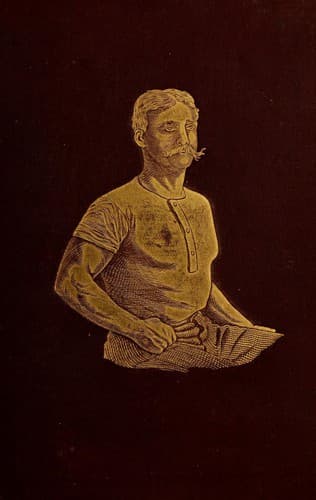
How to Get Strong and How to Stay SoBlaikie, William
Science
How to Get Strong and How to Stay So
Blaikie, William
Physical education and training
Take the man, for instance, who wants to walk a race of several miles,
or to run or row one. He has often heard of men getting their weight
down to a certain figure for a similar purpose. He has seen some one who
did it, and he is confident that he can do it. He sets about it, takes
much and severe physical work daily, warmly clad, perspiring freely,
while he subjects his skin to much friction from coarse towels. He does
without certain food which he understands makes fat, and only eats that
which he believes makes mainly bone and muscle. He sticks to his work,
and gradually makes that work harder and faster. To his gratification,
he finds that not only has his wind improved, so that, in the place of
the old panting after a slight effort--walking briskly up an ordinary
flight of stairs, for instance--he can now breathe as easily and
quietly, and can stick to it as long, as any of his leaner companions.
By race-day he is down ten, fifteen, or twenty pounds, or even more, as
the case may be. While he has thus reduced himself, and is far stronger
and more enduring than he was before, he is not the only one who has
lost flesh, if there have been a number working with him, as in a
boat-crew. Notice the lists of our university crews and their weights,
published when they commence strict training, say a month before the
race, and compare them with those of the same men on race-day,
particularly in hot weather. The reduction is very marked all through
the crew. In the English university eights it is even more striking, the
large and stalwart fellows, who fill their thwarts, often coming down in
a month an average of over a dozen pounds per man.
We have seen a student, after weighing himself on scales in the
gymnasium, sit down at a fifty-five pound rowing weight, pull
forty-five full strokes a minute for twenty minutes, then, clad
exactly as before, weigh again on the same scales, and find he was
just one pound lighter than he was twenty minutes earlier.
But the difference is more marked in more matured men, who naturally run
to flesh, than in students. A prize-fighter, for instance, in changing
from a life of indulgence and immoderate drinking, will often come down
as much as thirty, or even forty pounds, in preparing for his contest.
It should be remembered that, besides other advantages of his being
thin, it is of great importance that his face should be so lean
that a blow on his cheek shall not puff it up, and swell it so as to
shut up his eye, and put him at his enemy's mercy.
But most people do not care to take such severe and arduous work as
either the amateur athlete or the prize-fighter. If they could hit on
some comparatively light and easy way of restoring themselves physically
to a hard-muscle basis, and could so shake off their burden of flesh
without interfering seriously with their business, they would be glad
to try it. Let us see if this can be done.
Public-domain text, read in full here on John Shaqi.
Reviews
Reviews
No reviews yet
Be the first to share your thoughts on this work.
Elsewhere in the archive
Join the Discussion
Join the discussion
Sign in to leave a comment or review.
Sign InorCreate an account