So often nurses, even nurses who know that their clinical expertise grew
out of their practice, hesitate to share their nursing experiences. They
are apt to say deprecatingly, "Oh, that's _only_ my _personal_
experience." Yet that is precisely where the value lies, in the
uniqueness of human experience. Since each nurse's description of her
nursing experience is a glimpse of a real nursing world, the views
cannot justifiably be judged as right or wrong; they simply are. Once
the various views are expressed, they can be compared and contrasted,
not for the purpose of accepting some and rejecting others but rather in
the interest of clarifying each in relation to the other. Such a
dialogue of experientially based conceptualizations can result in a
complementary synthesis. The process calls for not only a true
appreciation of personal experience by each nurse but also commitment to
a collaborative effort of open sharing by a genuine community of nurses.
This view, that the development of humanistic nursing practice theory is
a dialogical process, has led to our valuing (in fact, insisting on) the
description {78} of nursing phenomena. We see phenomenological
description as a basic and essential step in theory building. Indeed,
considering the "state-of-the-art" of nursing theory development, it is
the most crucial and immediate need.
Looking back at the historical evolvement of our humanistic nursing
approach, it is obvious that we had been using and developing a
phenomenological approach for a number of years before we graced our
efforts with the impressive label, "Phenomenological Psychiatric Mental
Health Nursing," in a course offered to a group of nurses at Northport
Veterans Administration Hospital in April 1972. Although we were aware
much earlier that our interests and work were flowing in the general
stream of phenomenology, we usually refrained from using the label
because it did little to clarify our position.[1] The term has grown
less precise with the extension of its use in different disciplines and
with variations in methodology.
When we began applying the term "phenomenological" to our work, we
learned that to many persons it sounds strange, unpronounceable,
foreign; to some forbidding; to others enticing. We later coined the
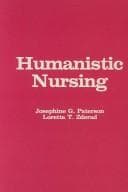
title "humanistic nursing" as being more suitable for it encompasses our
general existential bent. However, this change in title does not imply
any abandonment of our phenomenological approach. The description of
nursing phenomena is as highly prized now as ever. In humanistic
nursing, phenomenological and existential currents interrelate. Having
an existential view of nursing as a living dialogue influences which
phenomena one becomes aware of, experiences, values, studies, and
describes. Reciprocally, as one discovers and struggles to describe and
develop meaningful ways of describing nursing phenomena, the lived
nursing dialogue itself will be continually perfected.
Public-domain text, read in full here on John Shaqi.
Reviews
Reviews
No reviews yet
Be the first to share your thoughts on this work.
Elsewhere in the archive
Join the Discussion
Join the discussion
Sign in to leave a comment or review.
Sign InorCreate an account