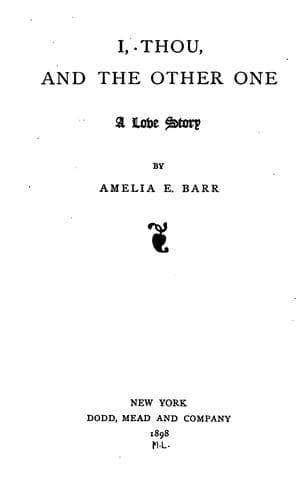
I, Thou, and the Other One: A Love StoryBarr, Amelia E.
General
I, Thou, and the Other One: A Love Story
Barr, Amelia E.
Fiction; Love stories
These circumstances, with all her audacity and advantages, she was unable
to control. Her brilliant beauty, her clever tongue, her ostentatious
dress and display were as nothing against the united disposition of a
score of other women to make her understand that they neither desired
her friendship nor felt her influence; and she had at least the sense
to retire from a conflict "whose weapons," she said contemptuously,
"were not in her armory." This condition of affairs naturally threw
her very much upon the Athelings for society. While the Duchess sat with
a few old ladies of her own caste and political persuasion, talking
fearfully of the state of English society and of the horrors Reform would
inaugurate for the nobility, Annabel spent her time with Mrs. and
Miss Atheling, and learned to look hopefully into a future in which,
perhaps, there would be neither dukes nor lords. Besides, Cecil North
had a habit of visiting the Athelings also; and, without expressed
arrangement, both Cecil and Annabel looked forward to those charming
lunches which Mrs. Atheling dispensed with so little ceremony and so
much good nature. It had been Cecil's intention to go with Edgar into
the country; but when the hour for departure arrived, he had not been
able to leave Annabel's vicinity, and, in some of those mysterious ways
known to Love, she understood, and was pleased with this evidence of
her power.
Cecil's mother had been particularly prominent in that social
ostracism the Reform ladies had meted out to her; and it gave to the
real liking which she had for Cecil a piquant relish to parade the young
man as her devoted servant in all places where his noble mother
would be likely to see or hear tell of her son's "infatuation." But
Cecil North's affection, and the favour it received, did not much
influence Kate. With the perversity of a woman in love, she believed
Annabel to be only amusing herself during Lord Exham's absence; and she
accepted, without a doubt, all the little innuendoes, and half-truths,
and half-admissions which Annabel suffered herself, as it were, without
intent, to make.
Public-domain text, read in full here on John Shaqi.
Reviews
Reviews
No reviews yet
Be the first to share your thoughts on this work.
Elsewhere in the archive
Join the Discussion
Join the discussion
Sign in to leave a comment or review.
Sign InorCreate an account