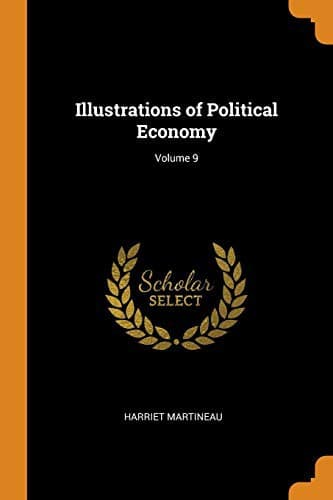
Illustrations of political economy, Volume 9 (of 9)Martineau, Harriet
General
Illustrations of political economy, Volume 9 (of 9)
Martineau, Harriet
Didactic fiction, English; Political fiction, English; Social problems -- Fiction
As the supply of slave labour does not rise and fall with the
wants of the capitalist, like that of free labour, he employs his
occasional surplus on works which could be better done by brute
labour or machinery.
By rejecting brute labour, he refuses facilities for convertible
husbandry, and for improving the labour of his slaves by giving
them animal food.
By rejecting machinery, he declines the most direct and complete
method of saving labour.
Thus, again, capital is sunk which ought to be reproduced.
In order to make up for this loss of capital to slave-owners,
bounties and prohibitions are granted in their behalf by
government; the waste committed by certain capitalists abroad
being thus paid for out of the earnings of those at home.
Sugar being the production especially protected, every thing is
sacrificed by planters to the growth of sugar. The land is
exhausted by perpetual cropping, the least possible portion of it
is tilled for food, the slaves are worn out by overwork, and their
numbers decrease in proportion to the scantiness of their food and
the oppressiveness of their toil.
When the soil is so far exhausted as to place the owner out of
reach of the sugar-bounties, more food is raised, less toil is
inflicted, and the slave population increases.
Legislative protection, therefore, not only taxes the people at
home, but promotes ruin, misery, and death, in the protected
colonies.
A free trade in sugar would banish slavery altogether, since
competition must induce an economy of labour and capital; i. e., a
substitution of free for slave labour.
Let us see then what is the responsibility of the legislature in
this matter.
The slave system inflicts an incalculable amount of human
suffering, for the sake of making a wholesale waste of labour and
capital.
Since the slave system is only supported by legislative
protection, the legislature is responsible for the misery caused
by direct infliction, and for the injury indirectly occasioned by
the waste of labour and capital.
-----
Public-domain text, read in full here on John Shaqi.
Reviews
Reviews
No reviews yet
Be the first to share your thoughts on this work.
Elsewhere in the archive
Join the Discussion
Join the discussion
Sign in to leave a comment or review.
Sign InorCreate an account