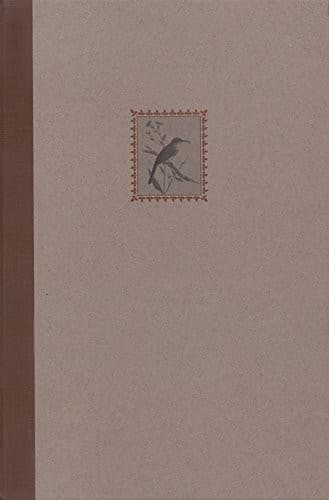
Illustrations of the Birds of California, Texas, Oregon, British and Russian AmericaCassin, John
Science
Illustrations of the Birds of California, Texas, Oregon, British and Russian America
Cassin, John
Birds -- North America
This bird was discovered in the Rocky Mountains, by that learned and
enthusiastic naturalist, Maximilian, Prince of Wied, who in the course
of travels in North America, and especially in the interior, contributed
a large amount of valuable information relating to the natural history
of the northern portion of our continent, as he had previously to that
of South America. Few books, in fact, contain more important
observations in the various departments of North American Zoology than
the work of that nobleman, “Travels in the Interior of North
America,—edition in German, Coblenz, 1839;” but, unfortunately, and
certainly without his approbation, nearly everything relating to natural
history is omitted in the English edition, London, 1843. In Ornithology,
the works of the Prince Maximilian are particularly valuable, and in
that relating to North America, there are many notices of little known
and interesting species, and the first descriptions of some which have
since been regarded as previously unknown by American writers.
The present bird differs in generic as well as specific characters from
all other forms of the family to which it belongs. Its short, heavy
figure approximates it somewhat to the Nut-crackers of the old world
(_Nucifraga_), and to Clark’s Crow of Western America (_Picicorvus
columbianus_), and its habits, so far as known, are in some respects
similar to those of the latter. It does not appear, however, to be in
any considerable degree a fruit-eater, but is decidedly carnivorous, and
almost rapacious; preying on Reptiles, particularly the various species
of _Phrynosoma_, or Horned Frogs, as they are called with but little
propriety, which abound in Western North America. It appears, in fact,
to resemble in habits, to some extent, the reptile-eating Kingfishers
(_Genus Todiramphus_) of Asia, the Pacific islands and Australia, and if
not absolutely allied, is certainly a strongly analogous representative
of those curious birds.
The first specimens of this bird which were brought to the attention of
American naturalists, were sent to the Philadelphia Academy, by Mr.
Edward M. Kern, who procured them during his connection with Col.
Frémont’s Expedition of 1846; and previously no others appear to have
reached Europe, than those of its discoverer, the Prince Maximilian.
More recently it has been observed by several of the naturalists who
have visited Western America. Our friend, T. Charlton Henry, M. D., of
the United States’ Army, has noticed it repeatedly in the vicinity of
Fort Webster, in New Mexico. To him we have the pleasure of expressing
our obligations for the following interesting notes relating to this
bird, as well as for many others:
Public-domain text, read in full here on John Shaqi.
Reviews
Reviews
No reviews yet
Be the first to share your thoughts on this work.
Elsewhere in the archive
Join the Discussion
Join the discussion
Sign in to leave a comment or review.
Sign InorCreate an account