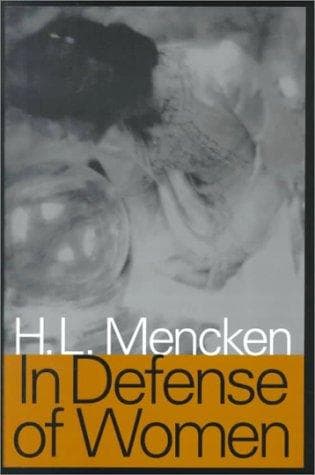
Sexism; Women -- Social and moral questions; Women -- Social conditions
The glad tidings preached by Christ were obviously highly favourable to
women. He lifted them to equality before the Lord when their very
possession of souls was still doubted by the majority of rival
theologians. Moreover, He esteemed them socially and set value upon
their sagacity, and one of the most disdained of their sex, a lady
formerly in public life, was among His regular advisers. Mariolatry is
thus by no means the invention of the mediaeval popes, as Protestant
theologians would have us believe. On the contrary, it is plainly
discernible in the Four Gospels. What the mediaeval popes actually
invented (or, to be precise, reinvented, for they simply borrowed the
elements of it from St. Paul) was the doctrine of women’s inferiority,
the precise opposite of the thing credited to them. Committed, for
sound reasons of discipline, to the celibacy of the clergy, they had to
support it by depicting all traffic with women in the light of a
hazardous and ignominious business. The result was the deliberate
organization and development of the theory of female triviality, lack
of responsibility and general looseness of mind. Woman became a sort of
devil, but without the admired intelligence of the regular demons. The
appearance of women saints, however, offered a constant and
embarrassing criticism of this idiotic doctrine. If occasional women
were fit to sit upon the right hand of God—and they were often proving
it, and forcing the church to acknowledge it—then surely all women
could not be as bad as the books made them out. There thus arose the
concept of the angelic woman, the natural vestal; we see her at full
length in the romances of mediaeval chivalry. What emerged in the end
was a sort of double doctrine, first that women were devils and
secondly that they were angels. This preposterous dualism has merged,
as we have seen, into a compromise dogma in modern times. By that dogma
it is held, on the one hand, that women are unintelligent and immoral,
and on the other hand, that they are free from all those weaknesses of
the flesh which distinguish men. This, roughly speaking, is the notion
of the average male numskull today.
Public-domain text, read in full here on John Shaqi.
Reviews
Reviews
No reviews yet
Be the first to share your thoughts on this work.
Elsewhere in the archive
Join the Discussion
Join the discussion
Sign in to leave a comment or review.
Sign InorCreate an account