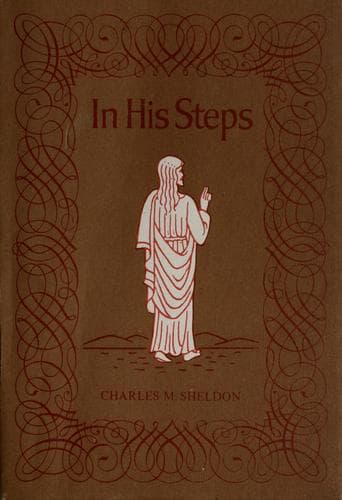
Christian fiction; Clergy -- Fiction; Jesus Christ -- Influence -- Fiction
FELICIA started off to the play not very happy, but she was familiar
with that feeling, only sometimes she was more unhappy than at
others. Her feeling expressed itself tonight by a withdrawal into
herself. When the company was seated in the box and the curtain had
gone up Felicia was back of the others and remained for the evening
by herself. Mrs. Delano, as chaperon for half a dozen young ladies,
understood Felicia well enough to know that she was "queer," as Rose
so often said, and she made no attempt to draw her out of her
corner. And so the girl really experienced that night by herself one
of the feelings that added to the momentum that was increasing the
coming on of her great crisis.
The play was an English melodrama, full of startling situations,
realistic scenery and unexpected climaxes. There was one scene in
the third act that impressed even Rose Sterling.
It was midnight on Blackfriars Bridge. The Thames flowed dark and
forbidden below. St. Paul's rose through the dim light imposing, its
dome seeming to float above the buildings surrounding it. The figure
of a child came upon the bridge and stood there for a moment peering
about as if looking for some one. Several persons were crossing the
bridge, but in one of the recesses about midway of the river a woman
stood, leaning out over the parapet, with a strained agony of face
and figure that told plainly of her intention. Just as she was
stealthily mounting the parapet to throw herself into the river, the
child caught sight of her, ran forward with a shrill cry more animal
than human, and seizing the woman's dress dragged back upon it with
all her little strength. Then there came suddenly upon the scene two
other characters who had already figured in the play, a tall,
handsome, athletic gentleman dressed in the fashion, attended by a
slim-figured lad who was as refined in dress and appearance as the
little girl clinging to her mother, who was mournfully hideous in
her rags and repulsive poverty. These two, the gentleman and the
lad, prevented the attempted suicide, and after a tableau on the
bridge where the audience learned that the man and woman were
brother and sister, the scene was transferred to the interior of one
of the slum tenements in the East Side of London. Here the scene
painter and carpenter had done their utmost to produce an exact copy
of a famous court and alley well known to the poor creatures who
make up a part of the outcast London humanity. The rags, the
crowding, the vileness, the broken furniture, the horrible animal
existence forced upon creatures made in God's image were so
skilfully shown in this scene that more than one elegant woman in
the theatre, seated like Rose Sterling in a sumptuous box surrounded
with silk hangings and velvet covered railing, caught herself
shrinking back a little as if contamination were possible from the
nearness of this piece of scenery. It was almost too realistic, and
Public-domain text, read in full here on John Shaqi.
Reviews
Reviews
No reviews yet
Be the first to share your thoughts on this work.
Elsewhere in the archive
Join the Discussion
Join the discussion
Sign in to leave a comment or review.
Sign InorCreate an account