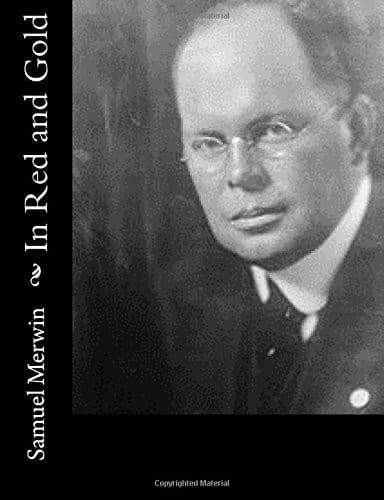
China -- History -- Revolution, 1911-1912 -- Fiction; Love stories; River boats -- Fiction; Yangtze River (China) -- Fiction
But Rocky cared little, now, what they might be. Once again he had
cleaned the black slate of his youth. His head was high again. He could
speak to Hui Fei convincingly in the morning.
His excellency, alone in his cabin, took from his hand-bag the book of
precepts of Chuang Tzü; and seated on his pallet, by the small table on
which burned a floating wick in its vessel of oil, read thoughtfully as
follows:
“Chuang Tzü one day saw an empty skull, bleached but intact, lying on
the ground. Striking it with his riding whip, he cried, 'Wert thou once
some ambitious citizen whose inordinate yearnings brought him to this
pass?--some statesman who plunged his country into ruin and perished
in the fray?--some wretch who left behind him a legacy of shame?--some
beggar who died in the pangs of hunger and cold? Or didst thou reach
this state by the natural course of old age?'
“When he had finished speaking, he took the skull and, placing it under
his head as a pillow, went to sleep. In the night he dreamt that the
skull appeared to him and said: 'You speak well, sir; but all you say
has reference to the life of mortals and to mortal troubles. In death
there are none of these.... In death there is no sovereign above, and
no subject below. The workings of the four seasons are unknown. Our
existences are bounded only by eternity. The happiness of a king among
men can not exceed that which we enjoy.'
“Chuang Tzü, however, was not convinced, and said: 'Were I to prevail
upon God to allow your body to be born again, and your bones and flesh to
be renewed, so that you could return to your parents, to your wife and
to the friends of your youth, would you be willing?'
“At this the skull opened its eyes wide and knitted its brows and said:
'How should I cast aside happiness greater than that of a king, and
mingle once again in the toils and troubles of mortality?'”
He closed the book; laid on the table his European watch; and sat for
a long time in meditation. As the hands of the watch neared the hour of
three in the morning, he took from the bag a box of writing materials, a
small red book and a bottle of white pills.
The leaves of the book were the thinnest gold. On one of these
he inscribed, with delicate brush, the Chinese characters meaning
“Everlasting happiness.” Tearing out the leaf, then, he wrapped loosely
in it one of the pills--these were morphine, of the familiar sort
manufactured in Japan and sold extensively in China since the decline of
the opium traffic--and swallowed them together. He inscribed and took
another, and another, and another.
Gradually a sense of drowsy comfort, of utter physical well-being, came
over him. The pupils of his eyes shrunk down to the merest pin-points.
His head drooped forward. His frail old body fell on the bed and lay
peacefully there as his spirit sought its destiny in the unchanging,
everlasting Tao.
CHAPTER XIII--HIS EXCELLENCY SPEAKS
Public-domain text, read in full here on John Shaqi.
Reviews
Reviews
No reviews yet
Be the first to share your thoughts on this work.
Elsewhere in the archive
Join the Discussion
Join the discussion
Sign in to leave a comment or review.
Sign InorCreate an account