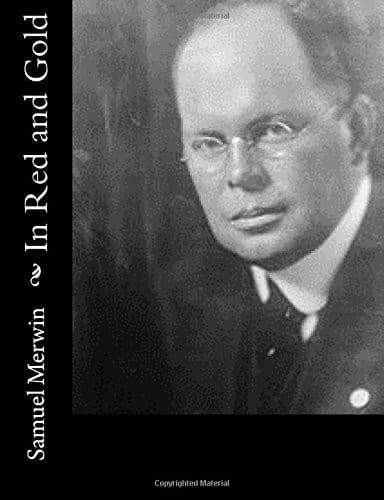
China -- History -- Revolution, 1911-1912 -- Fiction; Love stories; River boats -- Fiction; Yangtze River (China) -- Fiction
“Please! I don' know what you coul' have thought--how young you thought
I was when I wen' to college. But tha's the way it is. I'm an ol' lady.
I have learn' to like you ver' much. I'm fond of you. I wan' to feel
always tha' we're frien's. But we coul'n' be happy together. Our
interes' aren' the same--they coul'n' be. Can' you see, Rocky? If there
is something abou' me tha' stirs you--that is ver' won'erful. But we
mus'n' let it hurt you. An' that isn' the same as marriage. Marriage is
differen'--there mus' be so much in common--if a man an' woman are to
live together an' work together, they mus' think an' hope an'....”
Her voice died out. She was gazing again, mournfully at the dahlias.
When he released her hands they lay limp in her lap.
With a great effort of will he wished her every happiness, promised to
write, and got himself away.
This was on Thursday. Rocky walked at a feverish pace from the native
city to the European settlement that was so quaintly not Chinese--more,
with its Western-style buildings that were decorated with ornamental
iron balconies and richly colored Chinese signs, like a “China-town” in
an American city--and wandered for a time along Nanking Road; then out
to Bubbling Well Road; away out, past the Country Club to the almost
absurdly suburban quarter with its comfortably British villas; seeing,
however, little of the busy life that moved about him, threading his
way over cross-streets without a conscious glance at the motorcars and
pony-drawn victorias (with turbanned mafoos cracking their whips) and
bicycles and the creaking passenger wheelbarrow's on which fat native
women with tiny stumps of feet rode precariously. For those few hours
were to be recalled in later years as the quietly darkest in the young
man's life. There was no question now of dissipation; he knew with the
decisiveness of the Kanes that he had turned definitely away from the
morbid oblivion of alcohol and opium, as from the unhealthy if exciting
diversion of loveless women. But the bitterness would not down all at
once. Indeed it was savagely powerful, still, to cloud his reason. The
only evidence of victory over self of which he was aware was the fact
that he could now look almost objectively at himself, and could fight.
Public-domain text, read in full here on John Shaqi.
Reviews
Reviews
No reviews yet
Be the first to share your thoughts on this work.
Elsewhere in the archive
Join the Discussion
Join the discussion
Sign in to leave a comment or review.
Sign InorCreate an account