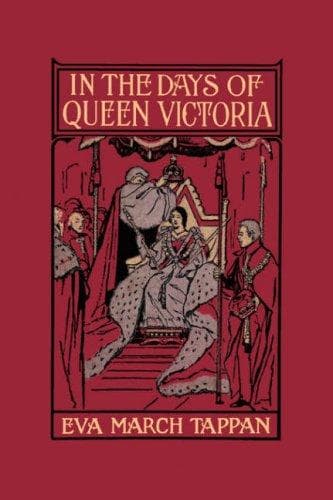
Great Britain -- History -- Victoria, 1837-1901 -- Fiction
"She thinks of nothing but her own sorrow," said another. "She has lost
all sympathy with the people."
This last speech was made at a public meeting. Mr. John Bright, the
"great peace statesman," was present, and he replied to it. His closing
words were, "A woman who can keep alive in her heart a great sorrow for
the lost object of her life and affection is not at all likely to be
wanting in a great and generous sympathy for you."
Little by little the Queen learned the feelings of her people, and
she soon published a response which must have made the grumblers feel
ashamed. She said she was grateful for their wish to see her, but so
much was now thrown upon her which no one else could do that she was
overwhelmed with care and anxiety, and did not dare to undertake
"mere representation," lest she should become unable to fulfill the
duties which were of real importance to the nation. Some months
later, she wrote of herself in a private letter: "From the hour she
gets out of bed till she gets into it again, there is work, work,
work--letter-boxes, questions, etc., which are dreadfully
exhausting."
The Queen wished sincerely not only to do what was best for the people,
but also to please them. She could not go to balls and theaters, but
early in 1866 she determined to open Parliament in person. The London
world rejoiced. They tried to imagine that the old days had come again,
and they put on their jewels and their most splendid robes. All the way
to the Parliament Building the streets were full of crowds who shouted
"Long live the Queen! Hurrah for the Queen!" In the House of Lords
there was a most brilliant assembly. Silks rustled and jewels sparkled
as all rose to welcome the sovereign. As she entered, the Prince of
Wales stepped forward and led her to the throne. The royal
Parliamentary robes with all their glitter of gold and glow of crimson
were laid upon it, for the Queen wore only mourning hues, a robe of
deep purple velvet, trimmed with white miniver. On her head was a Marie
Stuart cap of white lace, with a white gauze veil flowing behind. The
blue ribbon of the Garter was crossed over her breast, and around her
neck was a collar of diamonds. All the radiant look of happiness with
which those were familiar who had seen her on the throne before, was
gone. She was quiet and self-controlled, but grave and sad. Instead of
reading her speech, she gave it to the Lord Chamberlain. At its close,
she stepped down from the throne, kissed the Prince of Wales, and
walked slowly from the room.
[Illustration: Houses of Parliament.]
Public-domain text, read in full here on John Shaqi.
Reviews
Reviews
No reviews yet
Be the first to share your thoughts on this work.
Elsewhere in the archive
Join the Discussion
Join the discussion
Sign in to leave a comment or review.
Sign InorCreate an account