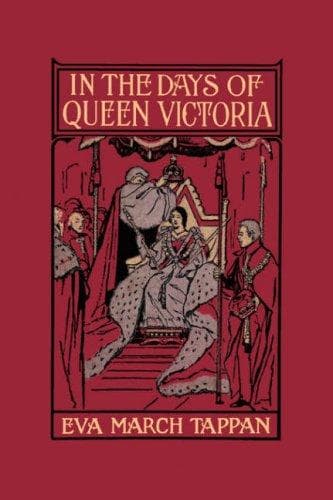
Great Britain -- History -- Victoria, 1837-1901 -- Fiction
About her own authorship the Queen was very modest, and when she sent a
copy of her book to Dickens, she wrote in it, "From the humblest of
writers to one of the greatest." At Sir Walter Scott's home, she was
asked to write her name in his journal; and, although she granted the
request, she wrote in her own journal, "I felt it a presumption in me."
When Carlyle met her, he said, "It is impossible to imagine a politer
little woman; nothing the least imperious, all gentle, all sincere;
makes you feel too (if you have any sense in you) that she is Queen."
Her being Queen gave her a peculiar power over the marriages of her
children, for they were not legal unless she gave her formal consent.
Early in 1871 she was called upon again to exercise her right, for far
up in the hills about Balmoral there was a momentous little interview
between the Princess Louise and the Marquis of Lorne. "Princess Louise
is so bright and jolly to talk with," one of the Scotch boys had said
of her when she was a very young girl, and this Scotch Marquis was of
exactly the same opinion.
The Queen had guessed before how matters stood with her daughter and
the gentleman whom she had once called "such a merry, independent
child." The young man had proved his independence by asking for the
hand of the Princess, inasmuch as it was three hundred years since a
member of the royal family had married a subject, but the Queen paid no
attention to tradition. She felt sure that the Marquis would make her
daughter happy, and that was enough. Most of her subjects agreed with
her; and one of the newspapers said jubilantly, "The old dragon
Tradition was routed by a young sorcerer called Love."
The wedding was celebrated at Windsor. It was a brilliant scene, of
course, and if all the gentlemen were arrayed as vividly as the Duke of
Argyll, the father of the bridegroom, the ladies did not monopolize
gorgeousness of attire. The Duke was a Scottish chieftain, and he
appeared in Highland dress. His kilt and the plaid thrown over his
shoulders were of the gay Campbell tartan. His claymore, a broad
two-handed sword, was at his side, and in front there hung from his
belt a sporran, or deep pouch made of skin with the hair or fur on the
outside. His dirk sparkled with jewels. Altogether he might have
stepped out of some resplendent assemblage of the middle ages. After
the wedding breakfast, the bride laid aside her white satin and Honiton
lace and arrayed herself in a traveling dress of Campbell plaid. The
carriage door was closed, and the young couple drove away for Claremont
in a little shower of white slippers, accompanied, according to
Highland tradition, by a new broom, which was sure to bring happiness
to the new household.
Public-domain text, read in full here on John Shaqi.
Reviews
Reviews
No reviews yet
Be the first to share your thoughts on this work.
Elsewhere in the archive
Join the Discussion
Join the discussion
Sign in to leave a comment or review.
Sign InorCreate an account