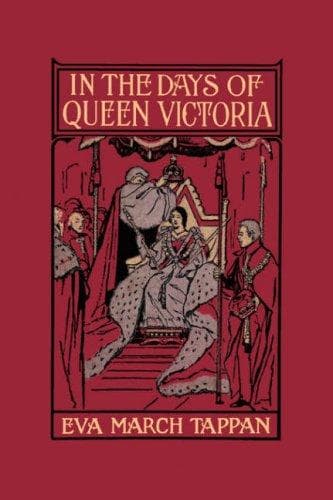
Great Britain -- History -- Victoria, 1837-1901 -- Fiction
First came the carriages containing the dark-faced princes of India,
robed in cloth of gold, and shaded with turbans glittering with
priceless jewels. Many carriages followed, filled with kings, queens,
crown princes, and grand dukes. There were equerries, aides-de-camp, an
escort of Life Guards, and a guard of honor composed of princes riding
three abreast, the Queen's sons, grandsons, sons-in-law and
grandsons-in-law. Towering up among them was the superb figure of
Prince "Fritz," Crown Prince of a united Germany. His uniform was of
pure white, his helmet of burnished steel, and on it was the Prussian
eagle with outspread wings. At last the woman for whom all were waiting
came in sight. The splendid robes of her coronation were fifty years
behind her, but even in her plainer dress she looked every inch a
queen. The Princess Alexandra and the Crown Princess of Germany were
with her. For twenty-five years the sovereign had so rarely appeared in
public that to her subjects this was more than a mere royal procession,
it was the coming back to them of their Queen. A great wave of devotion
and loyalty swept over the hearts of the throng. "Not _the_ Queen, but
_my_ Queen," they said to themselves, and such a greeting was given her
as few monarchs have received.
The Abbey had been filled long before. Rich strains of music were
coming from the organ. There was a moment's silence, then the silver
trumpets of the heralds were blown, and the church resounded with
Handel's march from the "Occasional Oratorio." The Queen entered. She
was preceded by archbishops, bishops, and deans, all in the most
elaborate vestments of their offices. The guard of royal princes walked
slowly up the nave, three abreast, the Prince of Wales and his two
brothers coming last. Slowly the Queen to whom all the world was doing
honor, ascended the steps of the throne. The vast assemblage was
hushed, and stood for a moment with heads bowed in reverence.
A short, simple service followed of praise and thanksgiving. Then her
sons and daughters, who had been grouped around the Queen, came forward
one at a time to bow before her and kiss her hand. As they rose, she
gave each of them a kiss, not of state, but of warm, motherly affection
that in this crowning moment of her career could not be satisfied with
the restrictions of ceremony.
That evening there were fireworks and illuminations in all the
principal cities. England shone literally from shore to shore, for a
beacon fire was lighted on Malvern Hills, and in a moment, as its
distant gleam shone on other hills, other beacons blazed, till from
Land's End to the Shetland Islands it was rejoicingly written in
letters of fire that for fifty years the realm had been under the rule
of a pure and upright womanhood.
At last the day was fully ended. "I am very happy," said the Queen; and
well she might be, for this day had shown her that she was sovereign,
not only of the land and its treasures, but of the loving hearts of her
subjects.
Public-domain text, read in full here on John Shaqi.
Reviews
Reviews
No reviews yet
Be the first to share your thoughts on this work.
Elsewhere in the archive
Join the Discussion
Join the discussion
Sign in to leave a comment or review.
Sign InorCreate an account