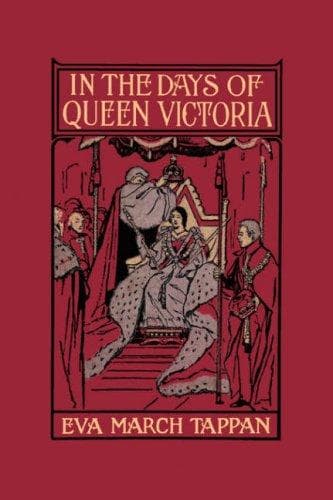
Great Britain -- History -- Victoria, 1837-1901 -- Fiction
The life of the Queen was gradually becoming very regular in some
respects, and especially in the way that she divided her year. For a
long time she had made two visits to Balmoral each year, one in the
spring and one in the autumn. She made also three visits to Osborne and
spent a week or more in London. The rest of her time was given to
Windsor and to her "vacation," which she spent somewhere on the
Continent. It is hardly fair to say that she had a vacation, for
wherever she went, one of her Ministers accompanied her and the
ever-present dispatch boxes followed her. At Balmoral the "Queen's
Messenger" arrived about six o'clock every morning with his box of
papers. These were arranged by the secretary in such a way as to save
her all unnecessary trouble. About ten, she entered upon the government
business of the day, reading, thinking, signing papers, and writing. At
half-past two the messenger set out for London.
But this was not all her work with the pen, for the royal family
carried on a vast amount of correspondence with the Queen. As nearly as
possible, she wished to hear from each one of them every day, not the
kind of letter that says, "I am well and hope you are the same," but
letters that told what the writers were doing, and what they thought of
the events in which they took part. The Queen could not answer all
these communications, of course, but if there was need of her advice or
sympathy, she never failed to write; and those of her letters that have
been made public are charmingly frank and sincere and full of most
tender affection.
Her own marriage had been so happy that in the marriage of her
descendants she paid little attention to whether a proposed alliance
would be of advantage to the kingdom; the chief question in her mind
was whether the young people would be happy together. Two years after
the Jubilee, the eldest daughter of the Prince of Wales married the
Duke of Fife. According to English custom, the daughter of a Prince is
not a peer, but a commoner, and although a title is usually given her,
it is only by courtesy and not by right. The Princess Louise, then, was
a commoner, but by marrying a Duke she became a duchess, and would have
the right to precede her sisters if they did not also marry dukes or
men of higher rank. One other privilege that she acquired was that, if
she was accused of any crime, she could demand to be tried by a jury
composed of peers.
In 1891 came the fiftieth anniversary of Queen Victoria's marriage, her
"Golden Wedding," as her children tenderly called the day. They gave
her a prayer book in which was written a stanza given them by Tennyson:
"Remembering him who waits thee far away,
And with thee, Mother, taught us first to pray,
Accept on this, your golden bridal day,
The Book of Prayer."
Public-domain text, read in full here on John Shaqi.
Reviews
Reviews
No reviews yet
Be the first to share your thoughts on this work.
Elsewhere in the archive
Join the Discussion
Join the discussion
Sign in to leave a comment or review.
Sign InorCreate an account