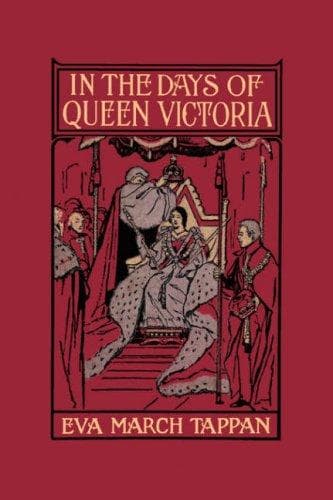
Great Britain -- History -- Victoria, 1837-1901 -- Fiction
Before the day had closed, Victoria and her mother were escorted back
to Kensington by the Life Guards to spend a short time before the Queen
should take up her abode in Buckingham Palace. "I do not want to go
there," she said to the Duke of Sussex. "I love the old Kensington
Gardens, where I can wander about as I please. Buckingham Palace is far
too big and too grand for me."
Other people may choose their homes, but sovereigns are less free, and
there was nothing to do but to leave the homelike Kensington, where her
greatest troubles had been an occasional hard lesson, and go to
Buckingham, or the New Palace, as it was called, which was to be her
London residence.
The New Palace was not yet completed, but men had been working night
and day to prepare it for the Queen. It stood on a desolate sand-flat.
There were dirty alleys and mud-puddles and dingy little hovels around
it, but the coming of the Queen was to make it gorgeous. A splendid new
throne, all dazzling in its crimson and gold, was built for her.
"Is it as your Majesty would have it?" inquired the builder.
"It's the most comfortable throne I ever sat on," replied the merry
young sovereign.
Buckingham was not lonely by any means. From over the whole country
came delegations from universities, corporations, and all kinds of
societies. One of these delegations was composed of Quakers, who
believe that to uncover the head is to show to man a reverence that
should be shown to God alone, and they marched up the stairway without
removing their broad-brimmed gray hats. This could not be allowed, but
the delegates could hardly be forbidden to see their Queen. Someone was
quick-witted enough to discover a way out of the dilemma. "The Quakers
won't take off their hats," he whispered, "but it is against their
principles to resist violence and they won't object if we do it for
them." Two of the attendants then respectfully raised each man's hat as
he passed between them, and returned it to his head when the audience
had come to an end.
At the death of a sovereign, Parliament is always dissolved, and a new
election is held. Victoria had stood by her "Aunt Adelaide's" side and
seen the grand procession which marked the prorogation, but now the
time had come for her to take the principal place in the procession.
"It would be better to remain away and allow your speech to be read for
you," said both her mother and her physician. "Remember how much you
have been through within the past month, and avoid this unnecessary
excitement."
The little Queen was wiser than her watchful advisers. She knew well
that her subjects had thronged every road leading to Buckingham because
they wanted to see her, and she meant to gratify them and appear in all
the splendor that a prorogation demanded. As to being exhausted by
these ceremonials, she laughed at the idea of such a thing. "I like it
all," she said. "I have lived so quietly that it is new to me. It isn't
tiresome, it is amusing."
Public-domain text, read in full here on John Shaqi.
Reviews
Reviews
No reviews yet
Be the first to share your thoughts on this work.
Join the Discussion
Join the discussion
Sign in to leave a comment or review.
Sign InorCreate an account