Great Britain -- History -- Victoria, 1837-1901 -- Fiction
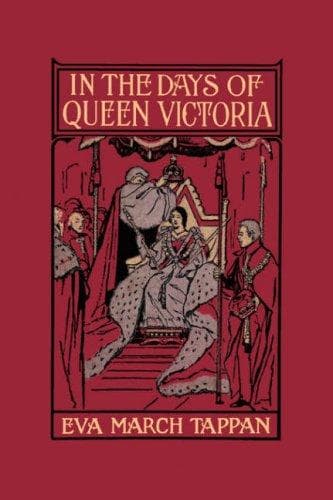
Therefore "Victoria Regina" was written in letters of gold about a
beautiful new throne in the House of Lords. Mr. Davys, her "good, kind
master," as she called him, heard her practice her speech; then she was
made ready for the ceremony. There were no more simple white muslin
dresses for her. She wore a kirtle of white satin and over it a crimson
velvet robe with border of ermine. The kirtle flashed with gold
embroidery, and the velvet robe was confined by a heavy golden cord and
tassels. Diamonds glittered and sparkled in her bracelets and coronet
and on her stomacher. A few years before, the young girl had walked to
the milliner's and home again, carrying her new bonnet in her hand; but
now she seated herself in the royal carriage and was drawn by eight
cream-colored horses. The Yeomen of the Guard rode before her; and so
she went to the House of Parliament.
The band played "God Save the Queen," as she entered the House of Lords
and was conducted to the throne on which "Victoria Regina" was written.
It was fortunate that she had no farther to walk, for before she seated
herself the lords-in-waiting laid upon her shoulders the heavy
parliamentary mantle of purple velvet.
The brilliant company of peers and bishops remained standing. "My
lords, be seated," said the Queen. The usual forms of business were
followed, but all interest centered in the speech of the sovereign. Mr.
Davys had tutored her well, and when she had finished, Fanny Kemble,
the greatest actress of the day, declared, "I never heard any spoken
words more musical in their gentle distinctness." Charles Sumner wrote,
"I never heard anything better read in my life;" and the Queen's kind
old uncle, the Duke of Sussex, could only wipe his eyes and murmur,
"Beautiful!"
It was not long before the court moved to Windsor Palace. The ordinary
routine of the Queen's day was breakfast with her mother between eight
and nine, followed by an hour or two with Lord Melbourne attending to
matters of state. Then came an audience with the Cabinet Ministers,
whenever there was business to be transacted. About two o'clock the
Queen and some twenty or thirty of the ladies and gentlemen of the
court took a horseback ride of two hours or longer. After this came
music or amusement of some kind until the dinner hour. If there were
any children in the palace, the Queen was always ready to spend this
time with them, and their company must have been a great relief after
the formalities of the day. Dinner was at about half-past seven. After
dinner came music, games, dancing, and conversation. This was the order
of the day when it was not broken into, but it was almost always broken
into, for there were balls, receptions, concerts, banquets, and the
reception of delegations.
Public-domain text, read in full here on John Shaqi.
Reviews
Reviews
No reviews yet
Be the first to share your thoughts on this work.
Join the Discussion
Join the discussion
Sign in to leave a comment or review.
Sign InorCreate an account