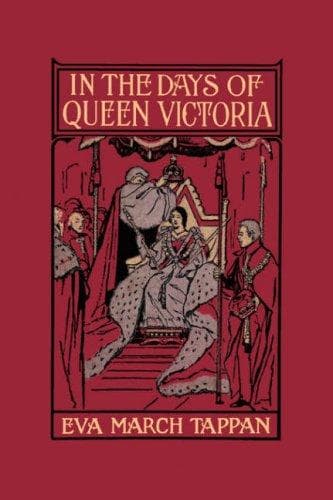
Great Britain -- History -- Victoria, 1837-1901 -- Fiction
Another year passed. Then came the Bedchamber trouble. King Leopold
watched every item of news from England. "Now is the time," said the
sagacious King to himself, and he proposed the visit.
There had been little correspondence between the cousins. Prince Albert
had sent the Princess sketches of the places that he had visited in his
travels, and when she became Queen, he wrote her a somewhat formal
little letter, reminding her that the happiness of millions lay in her
hands, and closing rather primly, "I will not be indiscreet and abuse
your time." Victoria must have had in her mind a picture of her cousin
that was a strange combination of a serious young man somewhat given to
sermonizing and the stout, merry boy of seventeen who had slipped down
to the floor of his carriage and pushed his dog's head up to the window
when people pressed around to see the Prince.
With these two conflicting notions in her thoughts, the Queen went to
the head of the staircase in Windsor Palace to welcome her "two dear
cousins." The stout boy had vanished but in his place stood a tall,
manly, handsome young man, with a cheery, thoughtful face. Two days
later a letter went from the Queen to "Uncle Leopold," which said, "My
dear Uncle, Albert is fascinating." Then she remembered that she had
two cousinly guests and added, "The young men are very amiable,
delightful companions, and I am very glad to have them here."
King Leopold wrote at once, "I am sure you will like the cousins the
more, the longer you see them." Then he talked about the Prince.
"Albert is full of talent and fun and draws cleverly. May he be able to
strew roses without thorns on the pathway of life of our good Victoria!
He is well qualified to do so."
While the hopeful uncle was writing this letter, Victoria was talking
with Lord Melbourne.
"My lord," she said, "I have made up my mind at last, and I am ready to
marry Prince Albert whenever he wants me."
"I am very glad of it," replied her fatherly friend. "You will be much
more comfortable; for a woman cannot stand alone for any time, in
whatever position she may be."
"Do you think that my people will be pleased?" she asked.
"I believe that they will," he replied, for he knew very well how eager
they were for her marriage. No one liked the Duke of Cumberland, who
was now King Ernest of Hanover, but if the Queen died without children,
he would come over to England and wear the English crown as well as
that of Hanover. The feeling against him was so strong that it had even
been proposed in Parliament to make a law forbidding him ever to occupy
the throne.
On the fourth morning of their visit, the two Princes went hunting. It
was a long forenoon to the Queen, for she had what she afterwards
called a "nervous" thing to do. They came back at noon, but they had
hardly time to change their hunting clothes before a message was
brought to Prince Albert that the Queen wished to see him.
Public-domain text, read in full here on John Shaqi.
Reviews
Reviews
No reviews yet
Be the first to share your thoughts on this work.
Elsewhere in the archive
Join the Discussion
Join the discussion
Sign in to leave a comment or review.
Sign InorCreate an account